Saturday, May 08, 2010

Strangers in a Strange Land, Day 4

Monday was our big day to really see Shanghai. It was the traditional holiday of "Tomb Sweeping Day," when Chinese are supposed to go back to their families' home towns to honor their ancestors. Because so much of the population of Shanghai consists of lower class workers from other parts of China, we figured that even though it was a holiday, the city itself might not be overrun with holiday-ing locals. The added benefit to us is that Greg, a US State Department employee, gets the day off for Chinese as well as American holidays, so he would be able to show us around.

We loaded the eight of us into a couple of taxis for the ten minute trip to the nearest subway station. To get to the trains, we had to walk about 400 yards through an underground mall with the usual mix of clothing and nic-nac stores. The subway is as modern as any in the world, with touch screen ticket machine that feature an English language conversion. Oddly, to get on the trains, we had to go through a simple, loosely supervised security check, requiring us to put our bags (not us) through an x-ray machine. The security checks have apparently been installed in advance of the World Expo, to suggest to the world that China takes safety as seriously as the rest of the world. The presumption is that the x-ray machines will be gone as soon as the Expo is done.

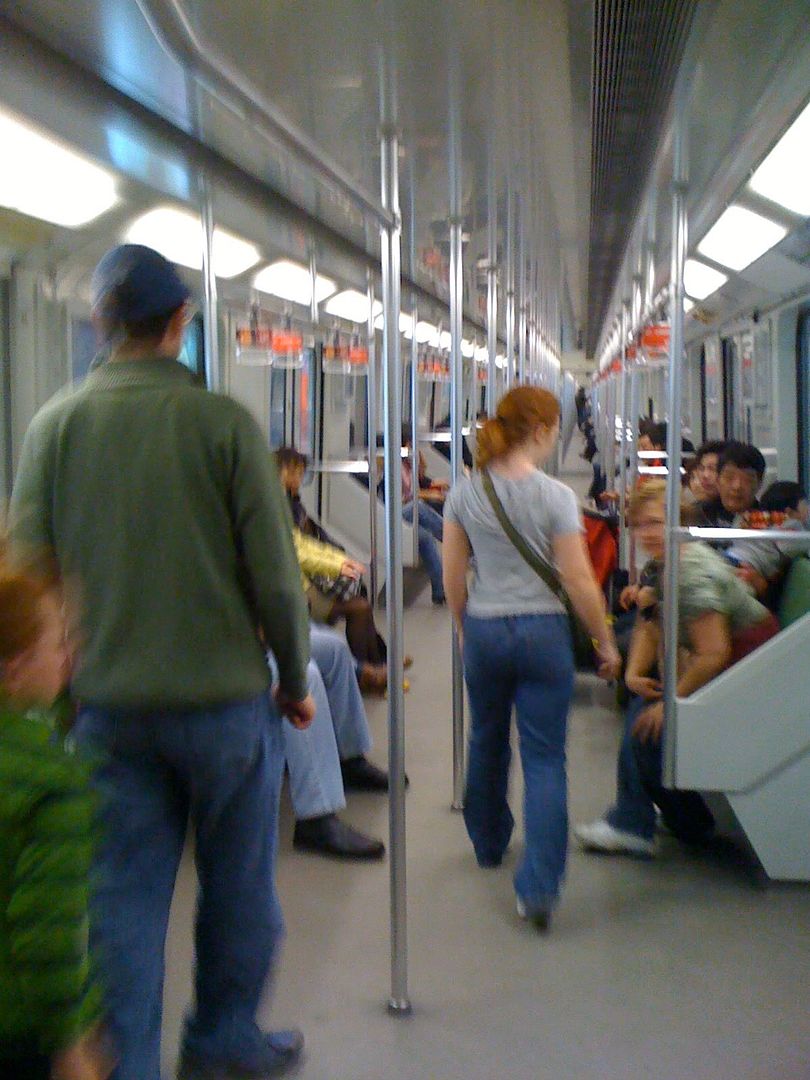
The trains themselves are impeccably clean, with video screens showing the news of the day.


The only oddity is that the names of the stations are written in very small print, making it a little tough to figure out which station you have arrived in. They are all identified in both Chinese and English, however.

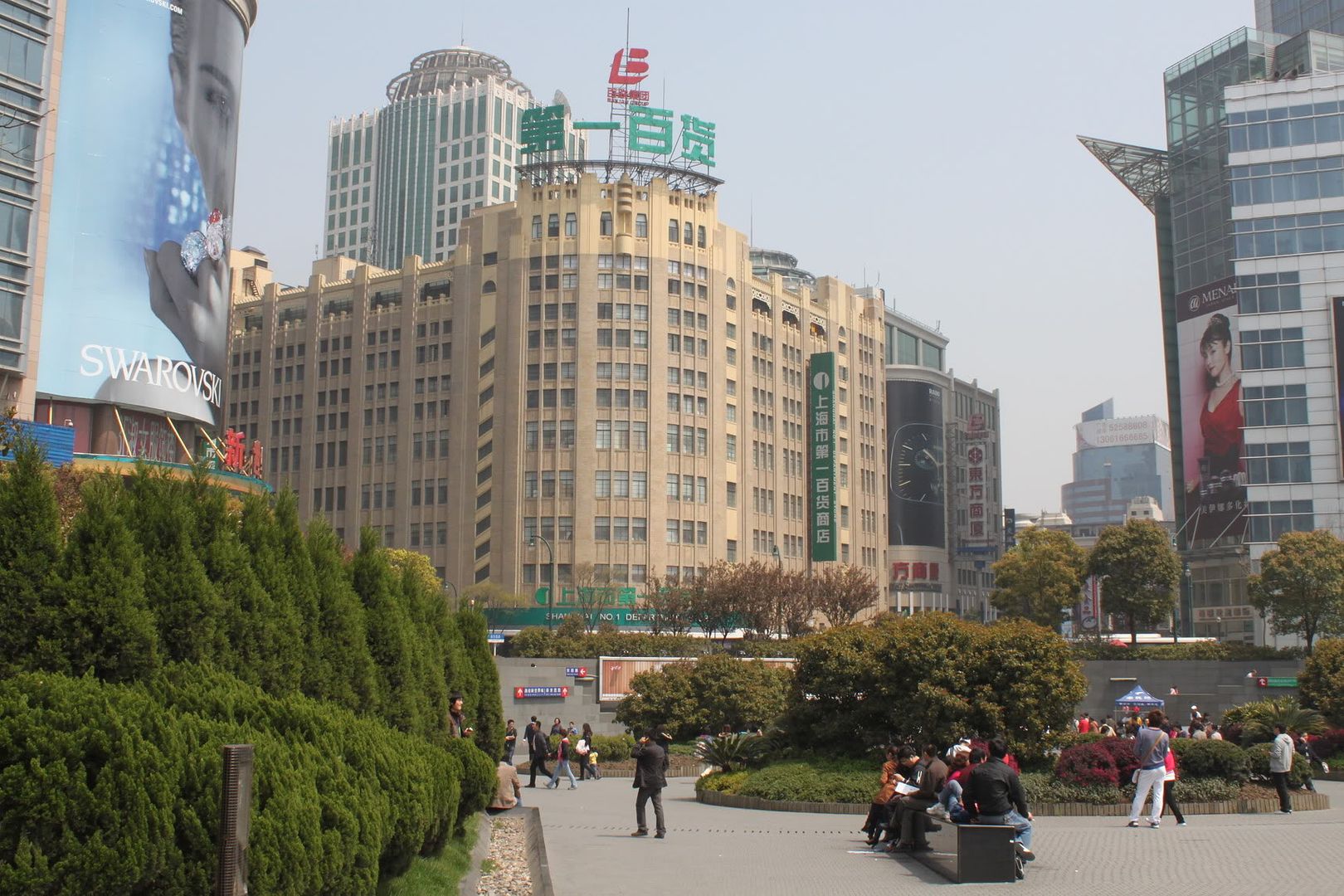
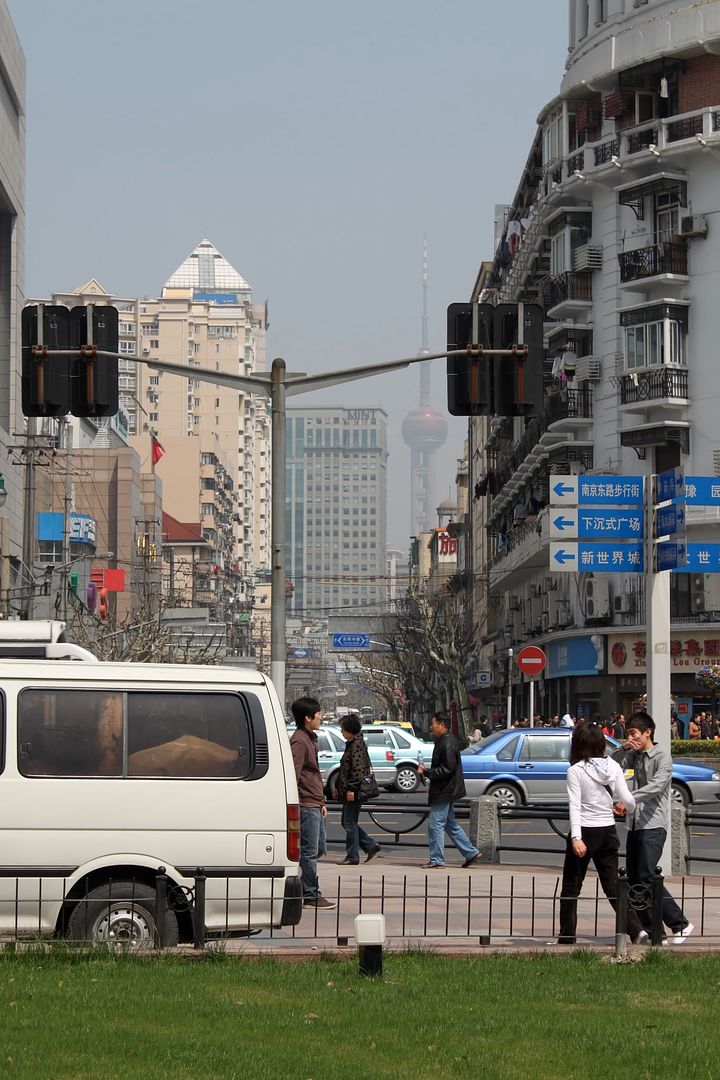
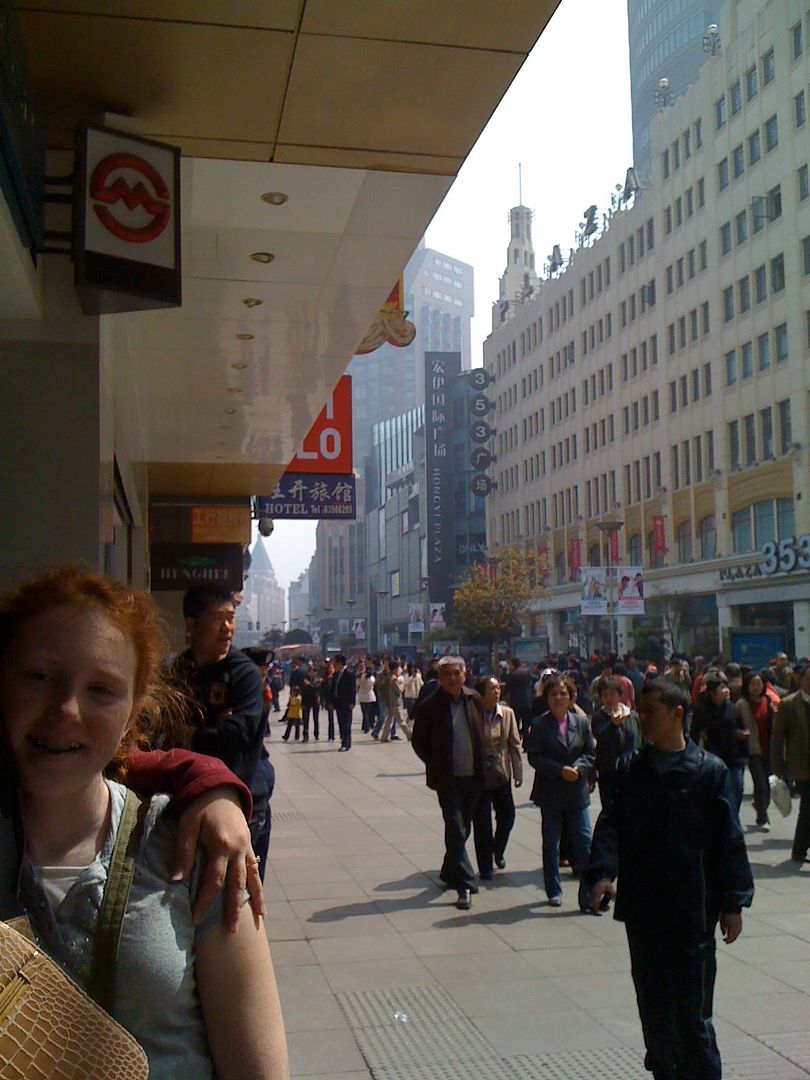
We got off the subway at Nanjing Road, a pedestrian-only road that is effectively a massive shopping mall.


Modern glass-and-metal skyscrapers stand next to dull Great Leap Forward-era blocks, next to elegant colonial-era buildings.


Most buildings had shopping malls in the first eight floors or so, an astonishing array of consumer bounty. The crowds were heavy but not overwhelming. Our little band of red- and blonde-haired kids, one of whom was in a stroller, attracted a lot of attention from much of the crowd. It was amusing to lag behind our group to watch people coming toward us react at the sight of us.

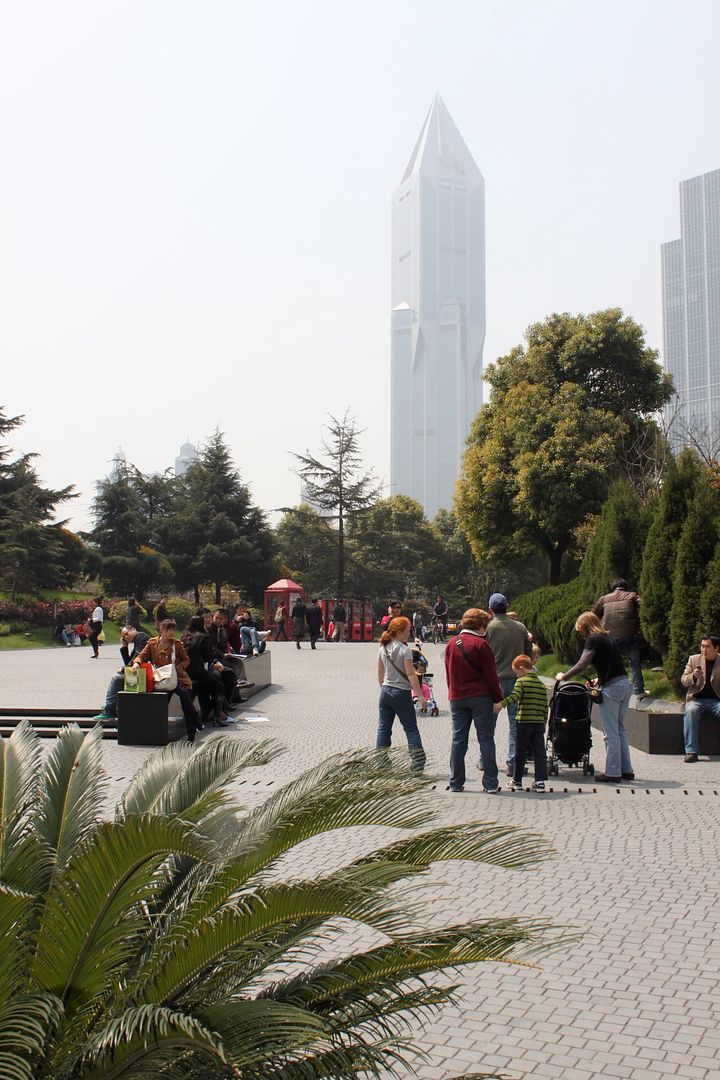
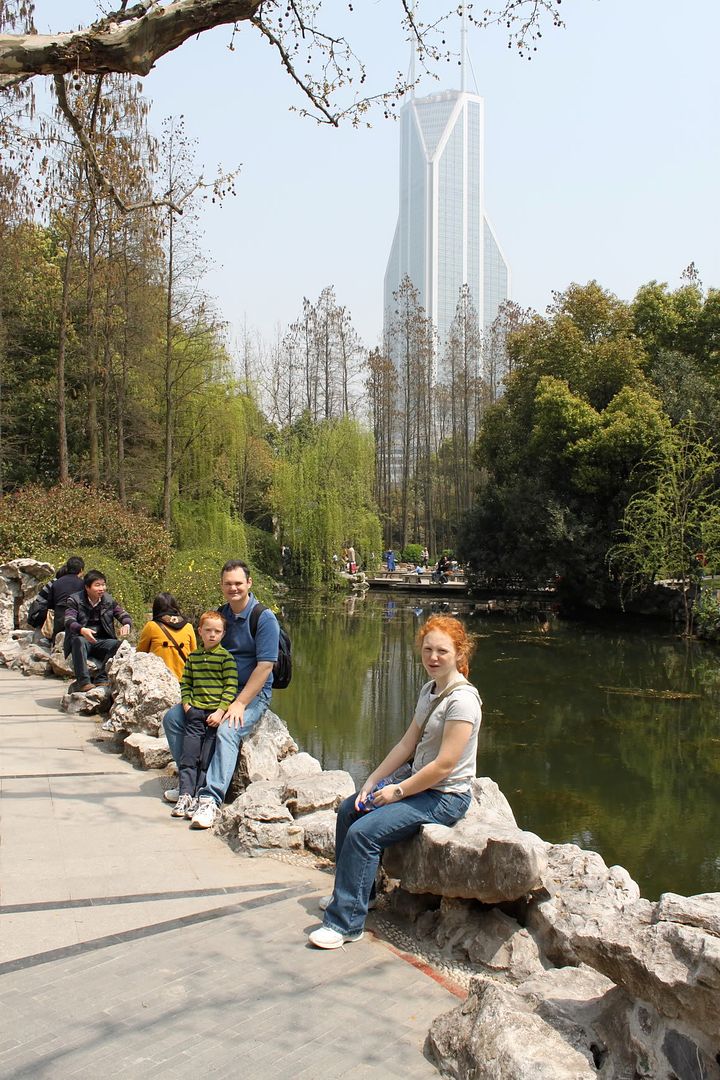
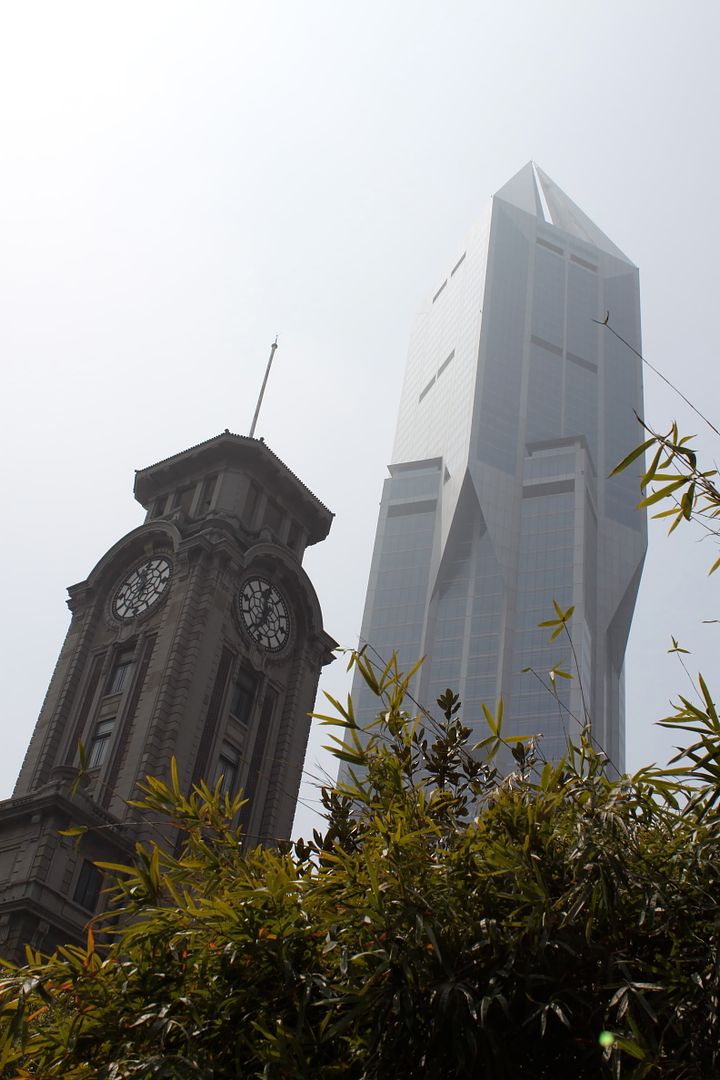
One end of Nanjing Road feeds into the People's Square, a large park set in the middle of the city, which also neighbors museums and the Municipal Government Building. People's Square is an attractive park with a lake, winding trails, a small carnival that we were advised to avoid for safety reasons, mah-jong players and, beneath it all, a massive subway station.


In the distance, through the haze, we could just make out the iconic Pearl Tower, across the Huangpu River from us:


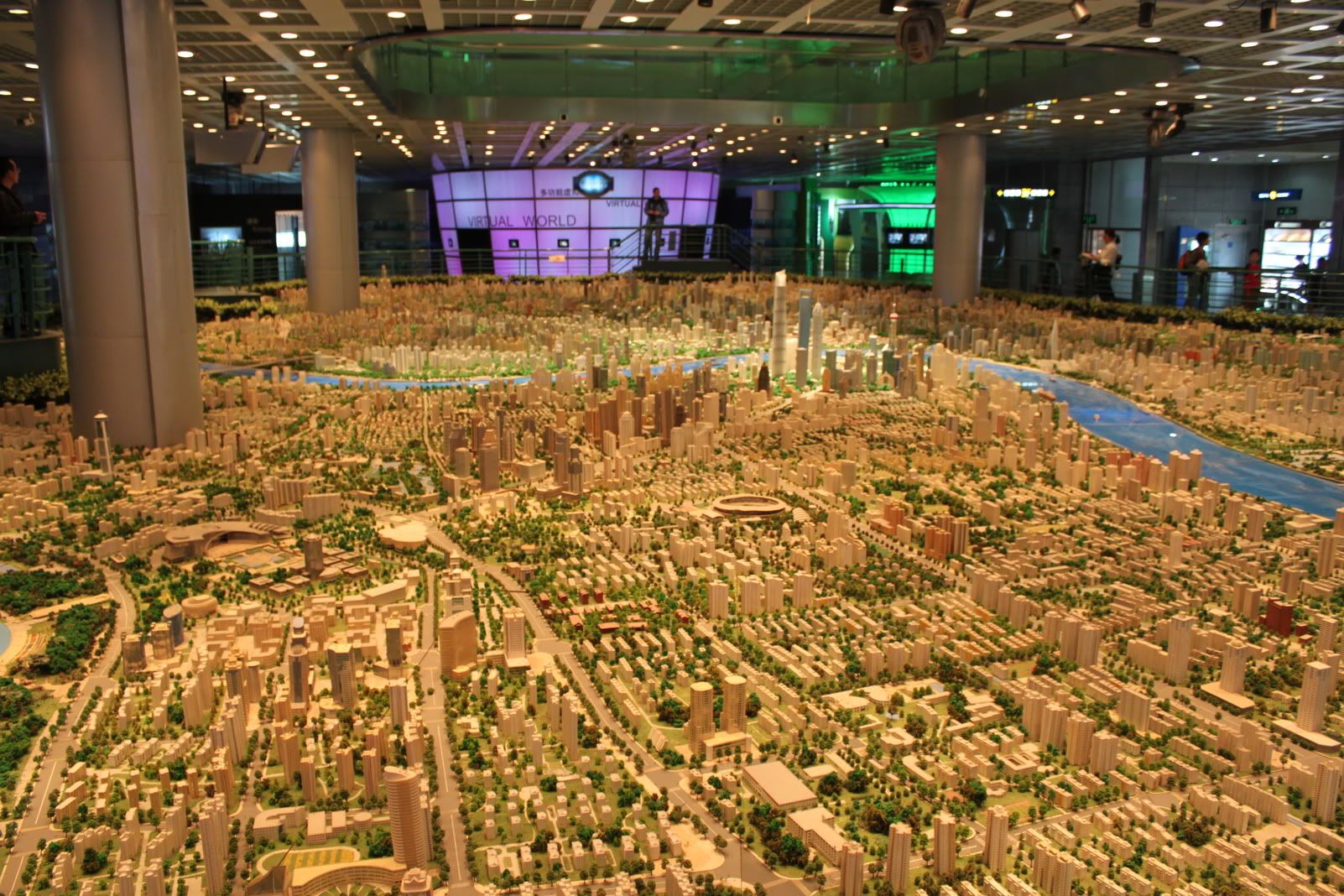
After enjoying Nanjing Road and People's Park, Kate took the three youngest kids home while Greg, Cheryl, Kelly and I went on to the Shanghai Urban Planning Exhibition Hall. One floor of the Hall was given over to the Expo, extolling the virtues of China's work to put on the Expo, due to open less than a month later. On another floor, there is a massive model of the city of Shanghai itself, or at least as much of it as they could fit in:


We then took a taxi across town to another small but tasty restaurant with the unlike name of Bellagio, where we sampled more traditional Shanghai dumplings, along with some sweet and sour pork I ordered for the purpose of comparing it with American fare. It was surprisingly similar to what you can get here, although even tastier. The bone also stays in the pork, which makes it a bit more work to eat.

After the late lunch, we went across the street to Carrefour, a massive, multi-story grocery/sundries store. I imagine WalMart is the closest approximately to this French store, which covered several storeys and sold all sorts of domestic and imported food items, books, motor scooters, towels, and just about anything else you could imagine.

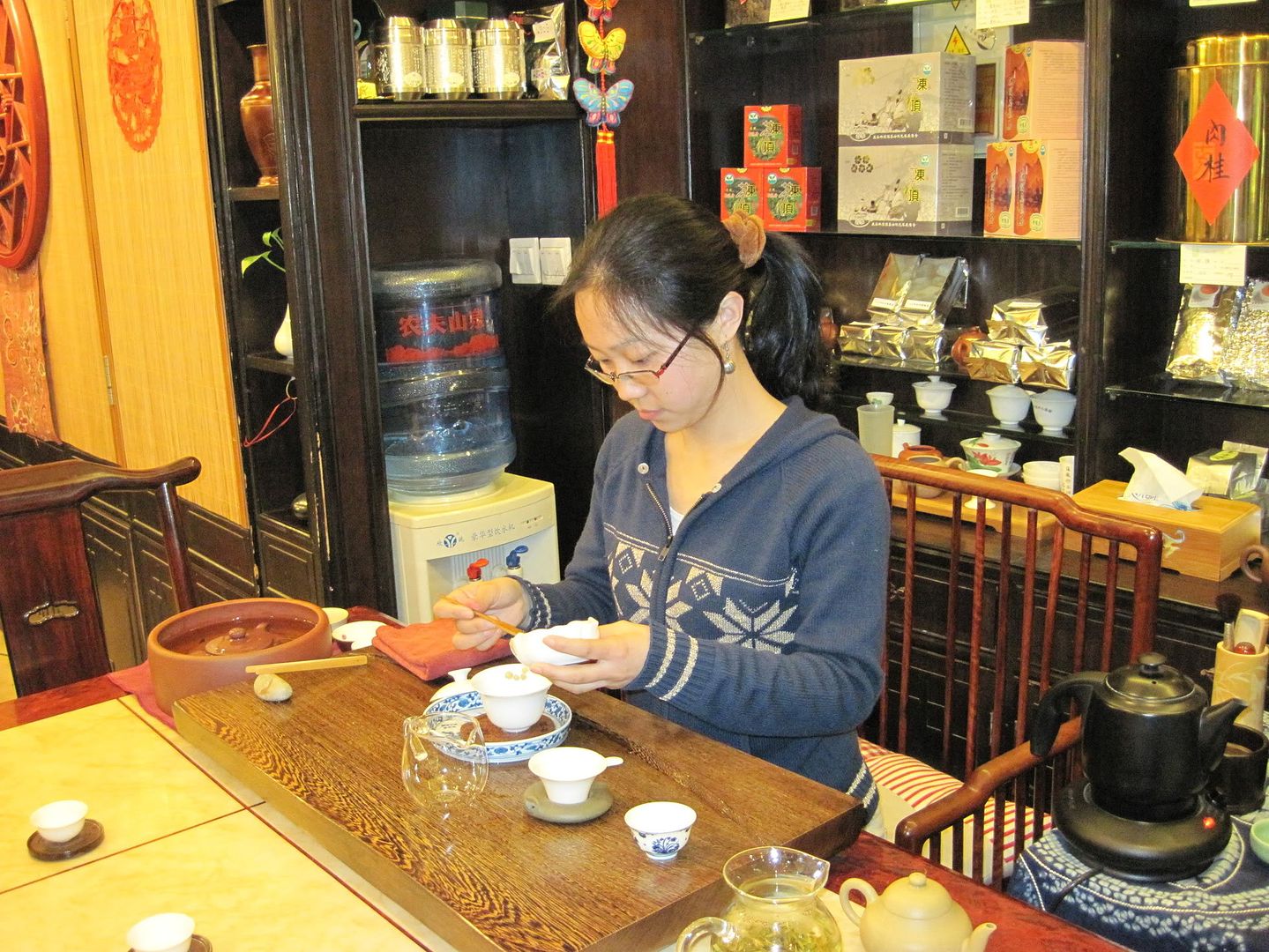
While we recuperated at home from our adventures, Cheryl went with Kate to a tea emporium, where they sampled teas from a seemingly endless variety.


Cheryl came home with some very attractive tea servers, thanks to the expertise of Kate, our master local shopper.

Our day in Shanghai gave us the foundation for everything we would do for the rest of the week. We learned about the general geography of the city, learned how to use the subway, and figured out a few more things we wanted to do during our trip. It was a perfect day of exploration.

Friday, April 30, 2010

Strangers in a Strange Land, Day 3

Easter Sunday in China. It was a day of rest for us. The kids collected Easter eggs around the house, including some plastic ones filled with Hersey's and Reese's chocolates, a specific request from our hosts. We spent time at Pearl City, fending off vendors. Greg took us to his nearby video store, his source for an impressively large DVD collection. This being China, the provenance of the DVDs is questionable, of course. When we entered the store, things had changed. The entire store was all domestic Chinese products. The owner recognized Greg, though, and waved us back to an unmarked, nearly hidden open doorway. Through that doorway we found a small room crowded floor to ceiling with western DVDs. Some of them had Chinese markings added, but most were what you would see in the states. As I perused an impressive supply of TV series box sets, Cheryl found a mega-Disney collection: 133 disks, covering just about everything Disney has produced, plus a few it didn't. For a touch over $100, it was ours. No more will we need to worry that most of our Disney movies are on videotape.

To recover from the shopping ordeal, Cheryl and Kate went to get massages while the rest of us hung out at home. Late in the afternoon, we went out to explore the neighborhood. We toured a "wet market," which is like a semi-indoor farmer's market that includes meet with the usual vegetables and fruits. By "meat" I mean chickens, ducks and pigeons strutting in their pens, fish splashing in bowls on the floor or lying beheaded on the counters, crabs scuttling in their own enclosures, and big hunks of roughly butchered pork displayed on the chopping blocks. The Chinese do not understand how we put up with meat that has not been butchered on site; the idea of butchering the animal on site, on the other hand, is a custom that is no longer part of the typical American's experience.

We continued our international culinary tour with a stop at a French restaurant a couple of blocks away. Founded and run by a very charming Frenchman, the restaurant specialized in yogurt and crepes. The proprietor started the restaurant because he could not find food to his liking. He now makes his own foods, and imports fine French cheeses and chocolates. He personally served our food to us, showing us how to roll up and cut or crepes, which were excellent. Our crepes were excellent, and the atmosphere unique.

We closed the day watching a disk from our new Disney collection, exploring the very earliest Disney cartoons ("Steamboat Willie" and the like). The movie was interesting, but I was most interested in learning whether the disk even worked. Thankfully, and contrary to my doubts, it did.

We needed an easy day. Our plan for tomorrow was to go downtown and take on Shanghai for real.

Monday, April 26, 2010

Strangers In A Strange Land, Day 1 (Cont.)

Our trip into Shanghai from Shanghai Pudong Airport in our Buick minivan-for-hire (lacking any markings or signs of regulation, we could not really call it a “taxi”) began well enough. As his companion dozed and the four of us tried to sort through the competing effects of fatigue, nervousness and excitement, the driver goosed his minivan up to 140 kph (abut 85 mph) on the sparsely populated freeway. Reason had clearly taken leave of my fatigue-addled brain; there was nothing about a speeding, borderline derelict Buick in the hands of a Chinese taxi driver that gave me cause for immediate concern.

Free at last from the airport, first impressions presented themselves rapidly. The air was the unhappy gray of smog, the likes of which I had not seen in many years. Chinese drivers, as I would confirm on a daily basis for the next several days, regarded painted lines on roadways with the same amount of respect they afforded to pedestrians, which is to say, none at all. Cars would routinely straddle lane lines, ready to jump into whichever lane moved more quickly. A final first observation, which would also be confirmed every day of our trip, to my continual astonishment, was that I had never seen so many large apartment buildings in my life. Along the entire distance of the freeway and as far as the eye could penetrate into the murky haze, the landscape was defined by apartment buildings. Every one of them was at least eight stories tall, and they were inevitably grouped in sets of four or more. Just as inevitably, laundry hung out the window of every unit. Mile after mile, apartment buildings the size of dormitories dominated the view. It slowly became clear how one city housed 26 million people.

Eventually, the haze yielded the distinctive bottle opener shape of the World Financial Center, a skyscraper proudly proclaimed to have the highest observation deck in the world. Seeing what I surmised to be the downtown financial center of the city in the distance encouraged me that we were headed roughly in the right direction.

Shortly thereafter, we exited the freeway and found ourselves deposited in the legendary Chinese traffic we had heard about from many different sources. It is thick, it is noisy with incessant tooting of horns, and it is chaotic to Western eyes as cars, motorcycles, scooters, bicycles, pedestrians and old men pulling wheelbarrows all vie for the same piece of tarmac.

With a few minutes of travel on the surface streets, however, I sensed that there was order within the chaos. Perhaps not order by an American’s definition, but certainly an order of process within its own system. Chinese traffic is like a school of fish or a wheeling swarm of sparrows. Consider the school of sardines on display in the huge kelp forest exhibit at the entrance to the Monterey Bay Aquarium. The huge swarm of innumerable fish flow together through their tank around and through all obstacles, then switch direction in a flash of silver, all moving as if they were a single organism. Biologists have made careers out of studying the group-think that informs and controls the complex collective movements of these massive, multi-unit groups. A sociologist, or perhaps a traffic engineer, could do just as well studying Chinese traffic patterns. The traffic does not go fast, but it also does not stop. Drivers change lanes on a whim and are accommodated, even where the laws of physics would appear to dictate that a merge is impossible because two solid objects cannot occupy the same place at the same time. Yet, a couple of toots of the horn later, the lane change is accomplished. Slower or stopped vehicles are overtaken in this way. Pedestrians wander into traffic and are ignored. Half a car length of space between cars is an open invitation to a merge from the side and a beep from behind. I quickly determined that I should keep my legs and arms as inboard from the sides of our car as I could; I could not believe that a rearrangement of our sheet metal was anything but inevitable and imminent.

After narrowly avoiding piling into the back of a disabled vehicle in our lane in a dark tunnel by merging one lane to our left that was already occupied by another car, we made a turn onto another street. Just as crowded as the thoroughfare we had left, the street was a curious mix of upscale stores and auto dealerships and tiny restaurants and businesses that defied description. Unfortunately, judging by our driver’s sudden lurch for his telephone, it also appeared to be the wrong road. After conferring with someone I assume was the man who scanned my credit card, who had a somewhat less vague idea of where we were headed, our driver decided that he needed to make a U-turn to go back to the main thoroughfare we had just left. Alarmingly, he decided he needed to make that U-turn RIGHTNOW. Thankfully, there was a gap in the two lanes of traffic coming toward us. The fact that the gap was about two car lengths, followed by a massive tour bus trundling along at the speed limit bothered our driver not a whit. As a passenger on the right side of the vehicle with a bus bearing down on us, it bothered me many whits. Confirming my newly developed theory about Chinese traffic functioning like a school of fish, the bus somehow did not compress my side of the minivan into my lap as we made a slow U-turn immediately in front of it. Horns sounded; yelps of alarm from our part of the minivan may also have been emitted. Because we were not killed by that single maneuver, we figured we would be perfectly safe for whatever else our journey held in store for us.

Returning to the main thoroughfare, the landscape soon turned a little more luxurious, and less stridently urban. We turned onto a wide boulevard (which I later learned was the very Hong Qiao Lu we were seeking) lined with trees and nicer homes and hotels behind walls. With no objective reason to do so, I sensed that we were nearing our destination. I had seen pictures of Greg and Kate’s place on their blog, and knew that they were in an orderly, attractively landscaped community of medium-sized houses. It felt like we would find such a place nearby.

Indeed, the driver was starting to doublecheck the street address and peering out the windows looking for the numbers. I did the same, and realized that we were in fact quite close. Unfortunately, as we drove slowly in the right lane, we drove past the entrance to the community we sought, which was completely hidden from the road. The driver realized this and knew he had to make a U-turn RIGHTNOW. From the right lane. Across two lanes of traffic in each direction. Once again, out of a sense of self-preservation, I looked at the floor of the minivan until the maneuver had ended without terrifying screeches of rent sheet metal. There may have been involuntary gasps of terror; they may have come from me.

At long last, we found ourselves at the address we have been given. All we had to do was convince the white-gloved, uniformed Chinese guard refusing admittance to the taxi that we belonged there. I saw, down the lane ahead of us, a narrow glimpse of the flowers and houses I had seen in pictures. We had to be in the right place. Somehow, the combination of our taxi drivers insistence and our tired, fish-out-of-water appearance convince the guard to allow us in. Sort of. The guard walked all the way to the designated address, our Buick following dutifully behind. I was immediately relieved to see, in the open garage, some children’s toys and other items that seemed to me, intuitively, to be Greg and Kate’s stuff. We jumped out of the minivan as the guard knocked on the door. A Chinese woman, presumably our friends’ housekeeper, answered, and had no idea who we were. I smilingly pleaded with her, trying to convince her that this was indeed Greg and Kate’s place. All the while, the taxi driver was hurriedly unloading all of our bags onto the driveway; whether or not this was the right house, this is where we were going to stay.

Finally, the best news we had all day. The woman disappeared into the house for a moment and returned bearing Greg and Kate’s wedding picture, a picture I had seen countless times in our days together in Fresno. I knew that ability to gain entrance to the house depended on my ability to convince all of these fine Chinese folks, none of whom spoke English or knew who in the world (literally) this motley band of white people was, that I knew the people in the picture. I nearly jumped for joy at seeing the picture, my sincerety in recognizing my friends nearly palpable. Maybe it was not so much acting as genuine delight in seeing the familiar picture of my friends, but it seemed to relax everyone. Suddenly, everyone was smiling, even the guard. As we thanked the driver and sent him on his way, the housekeeper went back into the house to call Kate. She put her on the phone with Cheryl and let us into the house, arrived at last. In a kind gesture, she also turned on the television to the Discovery Channel so the kids would have something to watch. Meanwhile, Cheryl and I went outside to relax in the backyard while Kate returned from a shopping trip she had taken with a neighbor, completely unaware that we had arrived in the country.

Before long, everyone arrived home, the tale of our ordeal was described with much laughter, apologies were made and quickly accepted in the best humor, and we headed out to dinner directly across the street… at a Texas ribs restaurant. Under strict instructions to order my burger well done because the Chinese proprietors did not really understand how to cook ground beef, we enjoyed a very comfortable, familiar meal as we started to fade.

At last, finally with our friends in their comfortable home, we settled down to sleep. Thirty six hours after we left our home to begin our journey, and forty eight hours after we arose to go to school and work on that day, Day One of our vacation was over.

Friday, April 23, 2010

Strangers in a Strange Land, Day 1

Ignoring the query of a young woman who asked us if we needed a taxi (why would we? A friend was meeting us), we deposited ourselves and our five bags in a small heap across the concourse from the exit of the baggage area. Only a few dozen people milled around the cavernous, harshly modern terminal. There were a couple of small seating areas, a souvenir stand, a couple of pay phones and an information desk in view. Through the high windows we could see the gray sky outside but not much else. After a few minutes of scanning the crowd trying not to look as anxious as we felt, and trying not to feel as anxious as we did, we slowly came to the conclusion that we had not just missed our connection in the crowd; he simply wasn’t there.

The question of why we had not been met had some relevance to what we would do next. What if Greg was just running a little bit late but would be there shortly? What if something was wrong, and either he or his family was in distress of some kind? Shoot, we could help them through it, be their friends in need, look after the kids, whatever was needed. Like the parent of a child who has stayed out later than expected, we could not help our thoughts from ranging far afield in irrational directions.

It brought to mind Billy Crystal’s musings in “When Harry Met Sally” about why Meg Ryan did not answer the phone when he called. He figured it could only be three circumstances: she was not home, she was home but did not want to talk to him, or she was home and desperately wanted to talk to him but was trapped under something heavy. After walking up and down the concourse for a while, unable to conjure up any familiar faces, we concluded that we found ourselves in some sort of variation of option C. We decided to take matters into our own hands.

My Papa bear instincts kicked in. I convened a brief informal family meeting, telling all of us (including myself) that the good news was that we had made it safely all the way to China, we had all of our luggage, we had some cash, credit cards, and smarts. We could take care of ourselves if we had to with no problem at all. I think they believed me.

That’s not to say we did not have some obstacles to overcome. We knew Greg’s address and his phone number. Of course, that critical information was still trapped on the dead iPhone. Our options narrowed to three: hire a taxi to take us to some random hotel in the city somewhere and work out our next move from there; hire a taxi to take us straight to the US Consulate and find Greg that way; or somehow revive the iPhone, retrieve our contact information, call Kate, straighten everything out and get on with our day.

Preferring to stick as close to the original plan as possible, I set out in search of an open electrical outlet so that I could get Greg and Kate's phone number and figure out what was going on. I finally found one near the end of the concourse, down by a Burger King (America’s cultural reach is equidistant with its grasp). I could not get the adapter to work with the outlet, however. Searching literally high and low from our base camp overlooking what appeared to be a completely vacant floor below, I spied another outlet down the escalator from where we were. I slipped downstairs and, after furtively looking for anyone observing me, I jammed the adapter into the outlet, this time with enough force to get it to work. Fearing that these could be the last moments of my iPhone’s life but knowing I had nothing to lose, I plugged the iPhone in.

Success!

The screen lit up with the “you let me run all the way down to empty, you moron” dead-battery charging icon. It wasn’t much, but it was a start. Impatient, I gave the phone just a few minutes of charge before taking off. The phone was a little balky, but eventually it fired back up as normal. Before the phone had a chance to die on me again (perhaps forever), I went into the Notes application and scrawled Greg’s address and phone number in pen onto my hand. Flush with success, I dashed back upstairs with our contact information triumphantly tattooed on my flesh.

We figured the best option was to use one of the payphones nearby. I attempted to make a call using my credit card, but the phone was only for international calls and I was trying to make a call across town. Thankfully, the phone right next to it was for local calls. Frustratingly, it did not take credit cards.

I began to feel like a character in an old Infocom adventure game, pushing every wall looking for secret doors to find random, hidden objects necessary to solve a multi-element puzzle that would open the next level of the game. I went over to the information desk and inquired about the local phone. The girl at the desk spoke enough English that we could communicate (yay!). She informed me that the phone would not take credit cards, and would not take cash (boo!), but would take a phone card. Conveniently, she sold the selfsame phone card (yay!). As I scrambled eagerly for my wallet, she also informed me that she took neither credit cards nor American dollars (boo!) I would need to pay for the phone card with Chinese money, of which we collectively had precisely none (boo!). These games never leave you without a way out -- the young lady pointed out that at the other end of the concourse, there was a money exchange (yay!). Weary of the chase, I sent Cheryl down to change some of our cash for Chinese RMB so that we could buy the phone card to use the local phone to call our friends to have them pick us up from the airport after our 22 hour journey.

After a surprisingly long wait in line, Cheryl came back – without any cash. For some reason, they needed passports. Another fifteen minutes later Cheryl returned with the cash. Amused only in passing by the benevolent gaze of Chairman Mao regarding me from each piece of currency, I returned to the information desk to obtain the precious 50-yuan phone card. Eagerly unwrapping the card like a three-year-old on Christmas morning, I dashed back across to the local payphone – which was in use by another lost family. Or rather, they’re poking at it, trying to figure out how it worked. I had been traveling far too long, and was too close to the end of our troubles to explain to them the intricate system of phone cards and money exchanges necessary to get the phone to function. Finally, as they moved on, I inserted the card, dialed the eight digit number into my hand, and looked forward to hearing the lovely voice of our friend Kate.

The phone was answered by a Chinese woman who spoke no English. Uh oh. ”Is Kate there?” “No Kate, no Kate.” It was impossible to sort through the linguistic subtleties: was there no Kate at this location at all? Or no Kate at that moment, which meant that there was a Kate at that location sometimes, which meant that we had the right number?

Now we wondered if even the contact information was wrong. I went back downstairs to juice up the iPhone again, to make sure I had not written the number down incorrectly. Just as I was about to step onto the escalator, one of the omnipresent state police got on ahead of me. He wandered slowly across the floor of the otherwise abandoned level to a solitary chair unaccountably placed in the middle of the room, and sat down. Why? I have no idea. I determined, after casing the immediate area by pretending to look at a poster advertising the Expo 2010, that if I pressed up against the wall where my electrical plug was, I would be just out of sight around a corner from this lone armed arm of the State. Trying to look as inconspicuous as a doughy 6 foot 1 inch white guy in jeans could look on the tile floor of an otherwise unoccupied level of a Chinese airport, I reconnected with the People’s Glorious Powerplant and brought the iPhone back to life once again.

This time, I figured I would just use the iPhone and call whomever I needed to in order to get us out of here. I had expected I would not use my phone for either voice or data on the trip, so all of its communication functions were off, and I had not bought an international calling plan. Willing to pay the price for an international call under these circumstances, I took it off of airplane mode to activate the phone function. If you have been paying attention, you know that it should go without saying tha I could not get phone service. Anywhere in the concourse. And then the phone died again. One step forward, one step back. Any way we cut it, we had no way of contacting our hosts. We were truly on our own.

We decided that we had no choice but to try to get a taxi to take us to Greg and Kate’s house. Making a total guess about the taxi charges, we figured we did not have enough cash, so back we all went to the money exchange. Not wanting to waste more time in the slow-moving exchange line, we stepped up to an ATM conveniently located next door. It refused my card. Back to the exchange line. In a sterling example of the efficiency of government workers who have no profit motive, the wait was interminable as the people behind the glass shuffled endless stacks of paper, left their posts, and generally tried to draw out my agony longer than I thought possible. When I finally got to the front of the line, the clerk added to the indignity by contemptuously throwing back my last twenty. It had a slight tear, and he would not accept it. Terrific.

After two hours, we had no ride, no more American money, no confidence that we had our hosts’ phone number, and no idea where they lived other than an address. We walked back to the phones, figuring Cheryl could try this time to call once more. It is entirely possible that I had botched the numbers somehow. We passed another young lady asking us if we needed a taxi. This time (and remembering ruefully the other taxi stringer we confidently blew off long before), we let her know we might be back. The local phone was in use, so we trudged further off down the concourse to yet another local phone. This time, there was no answer at all. Taxi time.

At that moment, a friendly young man in a suit materialized at our side asking if we needed a taxi, or better yet, a minivan. Our time of reckoning had come. I had written down our intended destination on a clean sheet of binder paper taken from Kelly’s journal. He took a look at and sucked in the air through his teeth, saying “oh, Hong Qiao Road, that’s really long.” I did not realize that the road traverses about half of the width of Shanghai itself. I did not have any other landmarks to go on. It took some time to convince him that we were going to a house, not a hotel. Nevertheless, he assured me that he could get us there; even better, he was willing to do so for a set price. After a brief negotiation, we settled on the equivalent of about $70. I knew almost nothing about where we were, but I did know that the airport was quite a distance from the city itself. Knowing that it would cost about that much to get from LAX to our old home in Glendale, which I estimated to be equivalent in terms of distance and traffic (and doing my best to calculate the conversion rate instantly), I figured that would be okay, even though it would use up most of our available cash.

Our spirits were lifted, bouyed to finally be on our way … somewhere. We tried not to think too much about the implications of getting into an unmarked minivan with two men who did not speak English who seem to have only a vague notion of where we were trying to go, spurred on by their boss, who had charged our trip to our credit card (hallelujah!) with a mobile credit card reader. I was still unable to give them any information other than the basic address. However, I did make it known that we were visiting an American diplomat working at the US Consulate. That bit of information probably saved us a good deal of trouble.

After the driver put all of our bags in the back of the Buick minivan by going over the backseat because the tailgate did not open, we shut the doors and headed out into the midday Shanghai haze. The excitement of finally arriving in China had long since worn off, as had the panic-driven adrenaline of learning that we would have to get ourselves around this massive foreign city. We did not have enough energy left to worry about where the taxi might eventually take us. If anything started to go sideways, I figured, we could simply demand that they take us to the US Consulate. That was enough comfort to allow me to relax and start to enjoy the strange land we had entered at long last.
Thursday, April 22, 2010

We'll Be Right Back ...

For the three or four of you wondering when, or if, our family ever escaped the clutches of the Shanghai Airport, the story will resume shortly. The haitus in the narrative has been caused by two events beyond my control: (1) a ferociously busy week at work; and (2) a complete shutdown on all "screen time" at home for the week, a commitment we made to Michael and his class. No TV, no computer, no game systems.

That has been a very interesting experiment. Night comes early when there is no TV to watch. Michael had an epic meltdown the first day, but has adapted well. The kids found themselves outside a lot in the afternoon, just looking for things to do. This week reminded me a lot of my own childhood, when, if it wasn't time for Gilligan's Island to be on, there simply wasn't anything to watch.

One might suggest that even when Gilligan's Island was on, there wasn't anything to watch.

Saturday, April 17, 2010

Strangers in a Strange Land, Day .9

I must have played too many games of solitaire on the iPhone on the trans-Pacific flight, because now, as our flight from Seoul descended toward Shanghai, it was now just an iBrick. The information I needed to get us into the country was beyond my reach, locked away in dormant silicon. The suddenly justified voices of worry in my head erupted into a mocking Hallelujah Chorus. I battled back; I knew I had the iPhone charger in my pocket, and I had seen a standard American-style plug on our last aircraft, also an American-made Boeing. The landing announcements had already been made, but I jumped up and dashed for the bathroom, reasoning (or at least hoping fervently) that there would be an outlet for shavers that would allow me to goose the iPhone just enough to get the address I need off of it. I found an open lavatory, and lo and behold, there was an outlet. I fished the cord out of my pocket, hooked everything up, and ... nothing. Drat.

I returned to my seat in full minor panic mode. I resolved two things. I had packed an outlet converter in the outermost pocket of our backpack, figuring that it might come in handy at some point (take that, irrational worries -- I planned for a worst case scenario!). I dug it out and stashed the portion that worked in China in my jacket pocket. For the destination data for our entry cards, I would simply write my friend's name, with the text "US State Department Officer" after it. Go ahead, Commies, challenge me now.

After weaving in the yellow air outside Shanghai for a while due to traffic at the airport, we finally landed at mammoth Shanghai Pudong Airport. We disembarked quickly from the airplane and found ourselves in China, in an totally modern and utterly empty concourse.

And I already felt like a fugitive.

All the way down the concourse, I scanned the walls for electrical outlets, hoping to get a quick burst of energy for the iPhone so I could retrieve our lodging arrangements (trying not to worry about possibly frying the phone instead). The broad walkway was populated only by the quickly-dispersed passengers from our flight, which made it impossible to surreptitiously siphon off some juice, if I could have found an outlet at all. By now totally under the influence of my nagging doubts, I feared that my first contact with the official sovereign authority of China would be at the hands of the state police for the unauthorized acquisition of the People's Glorious Electricity.

Trying not to look nervous or guilty (which is a guarantee that that is exactly how I looked), we queued for the immigration checkpost. After only a few minutes, our papers were taken by a young lady in a kiosk who was adorned in some sort of official military garb. Moments later, without a word, she handed our passports back, and we were through! I mumbled thanks in my first stab at Chinese and we were off to search for our luggage. Wonder of wonders (hah! Silence, you doubts!), both of our bags were waiting for us at the carousel. All that awaited us was to leave the controlled baggage area and emerge into the welcome embrace of our American hosts.

After all the doubts, all the near misses and slight mishaps, we had made it. I tamped the doubting voices down for the last time and triumphantly led the family through the gates into a walkway that was surrounded with people looking for their arriving colleagues and loved ones. It was a true red carpet moment, with all of them looking at us while we tried not to be overwhelmed looking back at them. All we needed to see was the face of our friend. I figured he would probably be dressed in a suit, since it was mid-morning on a work day. Caucasian faces were few and far between, so it would not be difficult to spot him.

The end of the arrival gauntlet came and went without our names being called or a familiar face spied through the crowd. We found ourselves ejected into another broad concourse, scanning the waiting crowd from the back now. Oddly enough, we seemed to have a greeting party of ... nobody. After fifteen minutes, still nobody. After a couple of trips up and down the entire concourse, still nobody.

Of course, we had heard about Shanghai traffic. It was perfectly possible that Greg was running late. I could clear that up in a moment with a phone call.

Did I mention that I put all of our in-country contact information on my iPhone? The iPhone that was still completely inert? And that I spoke exactly two words of the local language?

Thursday, April 15, 2010

Strangers in a Strange Land, Day .75

Taxiing out to the runway at SFO was its usual interminable trek, leading to jokes about driving to LA. (Okay, that was just me, and I don't think anybody laughed. If Dad had been there, he would have made the exact same joke, I'm sure of it.) We knew we would get away on time, though; one of our friends in our Tuesday night bible study is a friend of the air traffic control supervisor on duty, and assured us he would alert his buddy about our flight and the need to get it off the ground on time. Soon enough, we were in the air, flying right over our house and on to LAX.

The journey from the runway to the terminal in Los Angeles is even longer journey than in San Francisco. Gathering up our possessions, we burst into the terminal ready to transfer to our departure gate. Unlike civilized airports, however, there is no way to simply walk from the arrival gate to the departure gate. I had taken a passing glance at the layout of LAX in an in-flight magazine and reconfirmed what I vaguely knew: LAX is shaped like a "U"; we arrived at one point of the U and the international terminal was at the base of the U. What we learned from the surly gate agent in the abandoned United arrival terminal was that there was no way to traverse the half mile or so between the two places without going outside and catching a poorly identified bus at an unmarked stop.

So we walked.

With the clock pushing 11 pm, our next flight due to depart at 12:20 am, and neither a terminal bus nor terminal bus stop in immediate sight in the swarm of traffic, we set out in the general direction of the international terminal, hauling suitcase, bag, backpack and nagging doubts that we were going about this the right way, or even going the right direction. I did not want to spend our rapidly closing window of opportunity searching for a bus stop, then waiting for a bus to take us all the way around the airport, making numerous stops on the way. Thankfully, not one of us was the least bit sleepy.

Maybe it wasn't half a mile. It may have been closer to a mile; we finally arrived at the bustling Tom Bradley International Terminal lightly perspiring but happy to be among the unfamiliar signs of international carriers and the exotic mix of people that went with it. We found the Asiana Airlines ticket counter without too much trouble, ten minutes or so after 11. It probably was not a good sign that there was no line. As I dug out our passport wallet and asked for four seats together for our next two flights, the ticket agent smiled and offered the friendly suggestion that it would have been helpful if we had reserved the seats earlier. I was not nearly tired enough yet to snap that their online system would not allow me to select seats, the telephone agents told me I had to reserve seats at the checkin counter, and the United agent in San Francisco could not reserve seats because Asiana would not allow it (even though they are both Star Alliance members). Our worst fears were realized: although we could sit together on the short Seoul-Shanghai leg, we would be divided into two groups of two on the 13-hour LA-Seoul portion of the trip (aha! My doubts triumph again!). At least our luggage was checked all the way through to Shanghai. All we had to do was go to the gate, get on the plane and start negotiating with flight attendants and passengers to change our seats.

Once we passed through security again, that is.

Unlike the main domestic terminals, which have an abundance of security machines (even LAX has sort of figured out by now), all of us redeye travelers had to squeeze through four x-ray machines. Our time in the line approached thirty minutes and our designated boarding time was just a few minutes away. Michael started to fret about the time slipping away, allowing me to get some good practice in on my "don't worry" skills. These skills, I would later learn, would be crucial.

After finally making it through the slowest security line I have had the misfortune to experience in a long time, we headed to the gate, seemingly another quarter mile away. As our appointed gate hove into view, we could see the passengers lined up into the main concourse. We missed the boarding announcements, but found our way to the correct boarding group line anyway. We didn't have time to notice that our boarding group's line was almost all gone by the time we joined it. Without breaking stride, we went right on to the airplane.

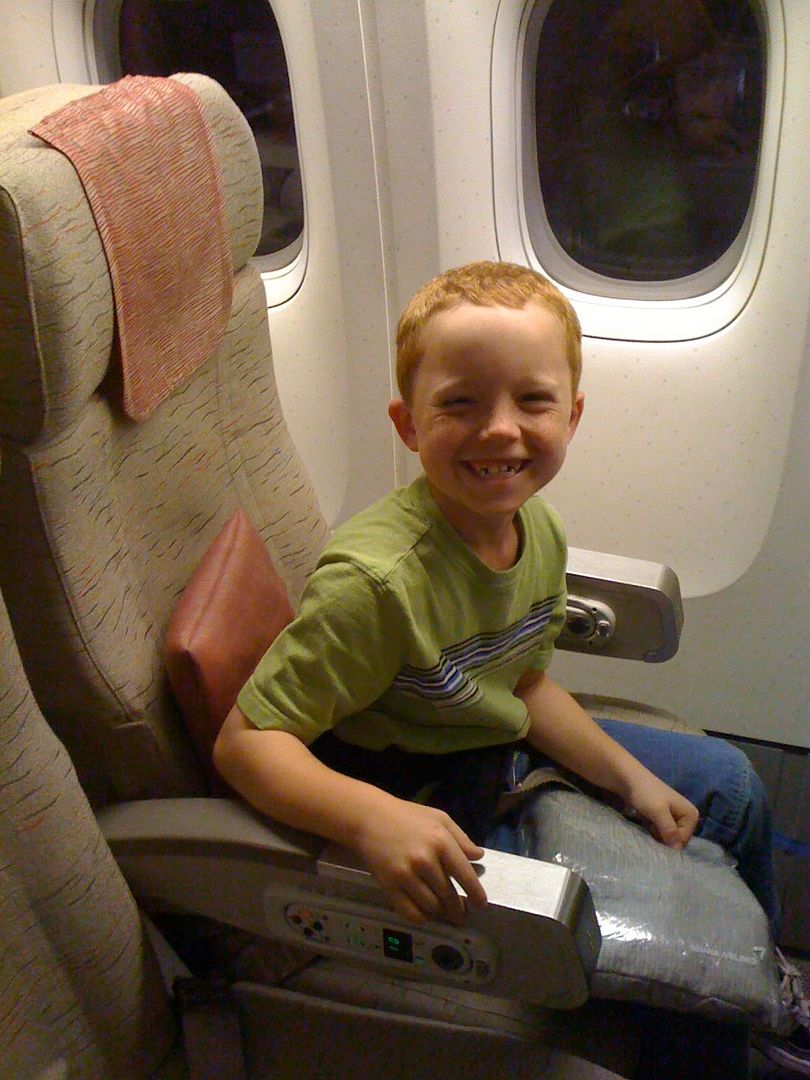
The seats on our airplane, a Boeing 777, were configured in a 3-3-3 arrangement, which would have presented problems for our group of four under the best of circumstances. As it was, two of us were in the next to last row on the left side, and the other two were a couple of rows away against the window on the other side. As Michael and I took our seats at the back, we discovered we were in a special row of only two seats because the curvature of the fuselage encroaches on seating space (that's how far back we were). That made for very comfortable seating for us because the offset of our sets meant I had a little extra elbow room on the aisle side, but I immediately found the nearby flight attendant (the only caucasian in a crew of Koreans) to explain our seating dilemma. The two people behind us refused to relocate, but a nice couple just across the aisle from us took us up on the offer of a window seat. We were seated together! My anxieties retreated to the shadows again, quelled but not quite silent. Before the airplane pushed away from the gate early, we were seated four across, divided only by the aisle, armed with blankets, games, music and food. As we would soon find, we would need none of it, because the airline provided it all, plus television shows and movies.

We settled in for the long overseas journey, happy to be done with the preliminary travel and finally on our way.


The crew kept the lights on for a couple of hours, serving us a truly excellent meal. Everything was great; our flight attendant asked, apologetically, if our kids would be willing to accept kids' meals that they had in surplus. Chicken nuggets? Forget the kids, I want some! Sometime in the middle of the night (time was quickly losing all meaning), as we flew over Eugene on our way toward Alaska, the crew doused the lights and we settled in to whatever fitful sleep we could manage.


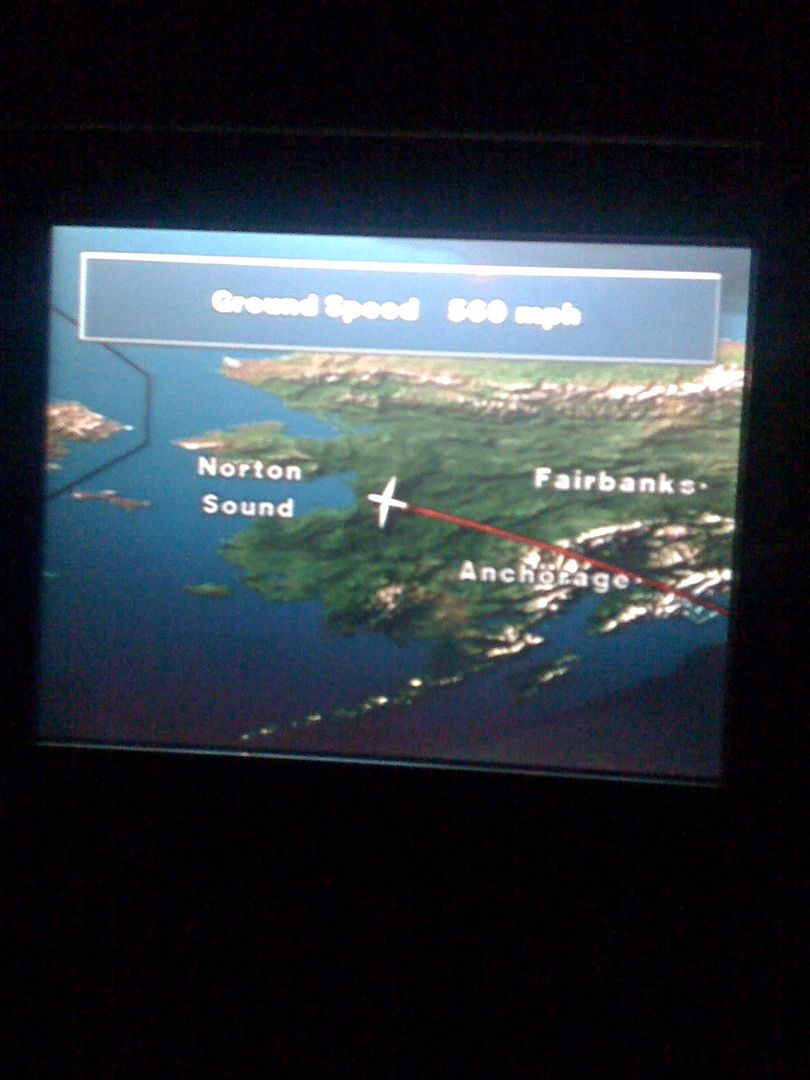
After experiencing the shortest April Fools Day of our lives (about 6 hours, from just before takeoff until we crossed the International Date Line), crossing over Alaska and down the eastern edge of Russia, we were treated to a tasty breakfast of pancakes, and landed in Seoul in the pre-dawn darkness. Seoul's Incheon airport has earned a reputation for fine amenities, and it did not disappoint. After going through yet another security check, we found our way to the Asiana passenger lounge. We had to wait a little while for everything to open, but I was eventually able to treat myself to a hot shower and a change of clothes in a spacious private bathroom, and some general relaxation in the lounge area.


I was also able to take advantage of the free internet terminal, where I discovered there were already some hiccups with something at work. I did the best I could to put out the fires (my inner doubter celebrating yet again that it wasn't wrong), and tried to put that out of my head as we looked forward to the final leg of our journey.

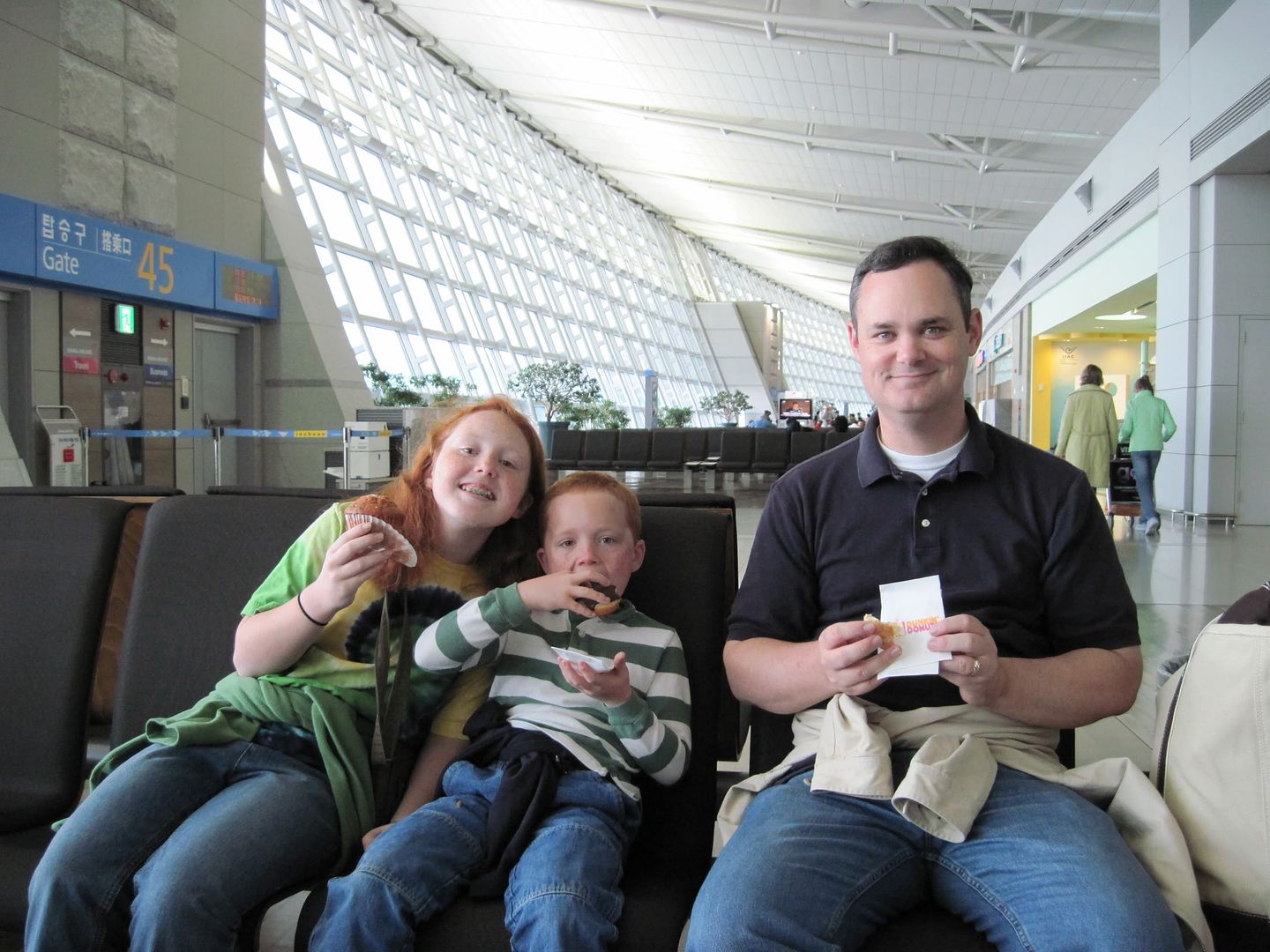
Just before our next flight, we exchanged some dollars for Korean currency and treated ourselves to our first meal in Asia: Dunkin Donuts.


The flight to Shanghai was aboard a 747, which allowed us to sit all together in the four seats in the middle of the aircraft, surrounded by Korean and Chinese businessmen. We were given another terrific meal, a hot, spicy fish-and-rice selection. We were weary, but getting close, and I felt as refreshed as I could be after my shower. All we had to do is fill out our immigration cards and we would be on to our adventures.

The immigration cards asked for typical information, such as our names, passport numbers, purpose of our visit ... and location of where we would stay. I had anticipated this! Before we left, I copied the home address of our hosts, which I had thoughtfully e-mailed to family members, onto a piece of paper. I had then transferred that information to the Notes application in my iPhone and left the messy piece of paper on my dresser at home. Aren't modern devices grand?

They are, so long as the batteries remain charged.

Tuesday, April 13, 2010

Strangers in a Strange Land: Day .5

All we wanted to do was travel 8000 miles across the Pacific Ocean from a small town in California to the biggest city in the world in China. All it would take was four people, their luggage, two days and three airplane flights. How hard could it be?

In the hours leading up to the trip, the fear that some part of our voyage would go awry nagged at me like the constant, low hum of a nearby high-voltage power line. Our journey had so many moving parts, it seemed to me inevitable that some gear on our Rube Goldberg-esque travel machine would slip a cog. Still, I did everything I could think of to ensure smooth passage. We saw the doctor and got our shots. I dutifully visited the Chinese consulate and obtained the requisite visas well in advance. I called Travelocity to reconfirm our reservation. I e-mailed our China hosts with our arrival information. In the hours ahead of our nighttime departure on March 31, the only elements that incomplete and beyond my immediate control were the amount of work I had to get done before I could leave the office in good conscience, and seat assignments for the trans-Pacific leg of the trip.

The night before we left, we settled on a strategy of checking two suitcases and carrying on a suitcase, handbag and a backpack -- pretty compact packing for a family of four on a 10-day trip. Knowing that we could do laundry while in China allowed us to dramatically reduce the amount of clothing we had to take along with us. I left for work early on the 31st with a firm idea of what I had to accomplish at the office, knowing that we were completely packed but for a few last-minute items which we carefully identified on checklists. My personal schedule called for me to leave work at 4:30 to be home by 5:00, so that we could leave home by 5:30 in order to get to the airport by 6:30 ahead of our 9:30 p.m. flight to Los Angeles. Over the course of the day, I did well to complete the tasks I had set out for myself, only falling behind by a pleasingly precise 30 minutes. The dash home took the prescribed 30 minutes, and the final packing and home shutdown took another scheduled 30 minutes. On the stroke of 6:00 p.m., almost exactly as we planned, we were underway.

The variables of packing, getting work done, and leaving for the airport had been successfully dispatched. No hiccups, but my low-grade anxiety did not abate. Rain had turned the Bay Bridge into a quagmire, turning what might be a 40 minute trip into something much longer. As I continually evaluated them time required to do everything from drive to the airport, to taking the shuttle bus from long-term parking to the ticket agent, to the lines at security, I decided that we were better off approaching SFO from the south off the San Mateo Bridge, especially since this meant we were could avoid the jammed up Caldicott Tunnel (traffic maps on the iPhone were essential for this analysis -- these are the good old days). This meant starting our trip on the local canyon road. In the rain.

Slippery (but very familiar) canyon roads and rainy freeways successfully behind us, we pulled into the long-term parking garage shortly after 7:00 p.m. Airport signs are never so difficult to decipher as when you think there's a chance you could be running late. I had never been to a long-term parking area before, which is quite some distance from the airport itself and is marked with only moderately helpful signage. Nevertheless, we made it, and took a picture of our parking space so that we could find our car again. We hauled our modest supply of luggage to the shuttle, which showed up agreeably promptly. Several more potential hazards, avoided.

The agent at the United ticket counter finally give me the scare I had been waiting for. In scanning our itinerary, he noted that his system showed us getting to Shanghai via Seoul, and returning via the same route, but without the essential Shanghai to Seoul leg. Because those flights were on another airline, neither he nor I could do anything about the apparent gap in our itinerary; he just left it for me to worry about. For the same reason, he could not reserve our seats on the transpacific flights, advising us to do so once we got on the ground in Los Angeles, a little less than two hours before the overseas flight. Just to add to the fun, his printer quit the middle of printing our boarding passes. After a few anxious moments, the printer sprang back to life, spitting out the missing fourth ticket.

At long last, we were in the airport, he had our boarding passes, our bags were checked (and within legal weight limits -- another anxious moment dismissed), and we had plenty of time for dinner. We proceeded to dine at the slowest seafood restaurant on the West Coast. By the time we finished our simple meal (during which I re-reconfirmed our full itinerary with Travelocity), we only had a few minutes until we were scheduled to board our flight to Los Angeles. At least that short flight would be uncomplicated.

Or so I thought, until I pulled out the boarding passes in the gate area. When the ticket agent’s printer choked on our boarding passes, it printed an extra copy of a pass it had already printed before it took its smoking break. Interestingly, neither the ticket agent, nor I, nor the two TSA operatives at the security checks (who had to compare the boarding passes with our passports) noticed that Cheryl had two boarding passes and I didn't have one. As my stomach sank standing there at the gate, seemingly miles from the ticket agent, knowing that I would have to figure out a way to get on the plane even as the first boarding group was being called, a perverse sense of satisfaction washed over me -- my anxiety was justified! Something went wrong!

The gate agent, besieged with business travelers trying to catch the last overbooked flight to LA, was able to solve my problem quickly, issuing my boarding pass as our boarding group was being called. Our three carry-ons stowed safely, all we needed was a timely departure to ensure that we would not eat into too much of our almost two-hour layover in Los Angeles. After all, we still did not have seat assignments for the 13-hour trip to Seoul, or the 90-minute jump from Seoul to Shanghai. As I tried to convince myself that families of four routinely check in 90 minutes before trans-Pacific flights, the low buzz of anxiety resumed its customary resonance. Really, what could possibly go wrong?

Tuesday, March 30, 2010

A Job for the Most Interesting Man in the World

If you always wanted to be a pilot but were put off by the bus-driver mentality ... if you always wanted to be an international spy ... if you always wanted to be a thief ... there is a job for you: airliner repo man. I would happily listen to these guys tell war stories all day.

Monday, March 29, 2010

Chinese Volvo

We spent the evening watching a news program on CCTV International, a Chinese-based television network. The perspective on world events was much broader than anything you would see on a domestic US broadcast, or even CNN. The news broadcast, headed by an Englishman but run and reported by Chinese nationals, was followed by a three-man panel discussion show in which the host and his guests discussed the acquisition by Geely Automobile of Volvo. Largely unnoticed in America, Volvo became a Chinese company on Sunday (the deal will close in the third quarter).

If the television host's reaction is any indication, the Chinese view of the takeover of Volvo is that China has stepped up onto the world's automotive stage in a big way. China is now the largest automobile market in the world, and is eager to start making cars that the rest of the world also might want to buy. Chinese designs are famously derivative, to put it politely, and are notoriously poorly designed and built. The acquisition of Volvo, in Chinese view, will go far in raising the stature of the Chinese auto industry. Volvo is viewed as a luxury brand known for safety and quality, even though its products are not very well known yet within China itself. Geely, which is not a very prominent domestic maker, is seen as learning a great deal from Volvo's technology while enjoying the halo effect of the worldly Volvo name.

In fact, commentators believe one of the most important tasks for Geely will be to avoid damaging the Volvo brand. Unfortunately, to Westerners, this may be a nearly impossible task. Many car enthusiasts I am in contact with are deeply suspicious of Chinese carmakers, and believe that Volvo will suffer both in reputation and in actual product development. It will not surprise me at all if Volvo's sales in the U.S. fall precipitously in the next few years. Volvo not only faces the prospect of assuring American customers that Chinese ownership will not adversely affect its design and construction capabilities, but the sale by Ford and business losses over the last couple of years have delayed product development. For instance, the XC90 should have debuted a redesign this year; instead, it has received only minor cosmetic updates. The redesign has been pushed off a few years, which by the time it arrives will be years behind its competitors. This may do as much damage to the Volvo brand as fears about Chinese design and manufacturing prowess.

Even though Volvo will purportedly retain its Swedish management, the Chinese commentators speak of the buying power of the huge Chinese market causing the Volvo product line to change to favor smaller, more economic cars to suit the Chinese market, rather than the larger, luxurious models that have defined the brand for years. In this flexing of the muscle by the Chinese domestic market can be heard not just a potential makeover of the Volvo brand but the coming dominance of the Chinese economy.

Sunday, March 28, 2010

Saturday Sports Highlights

The kids are well into their sports seasons now.

After one practice and one practice game (which her "Penn State" team won), Kelly's volleyball team is now 2-0 for the season. The difference in quality of play between sixth grade and seventh/eighth grade is dramatic. It helps that Kelly's coach drafted a team of girls who all have good basic skills, but throughout the league, bump-set-spike is much closer to reality than it ever was last year. Kelly has proven to be a reliable, contributing member of the team, with a surprisingly effective underhand serve, solid passing skills, and an ability to set the ball wherever it is needed. She also saved a key point this weekend with an outstretched left hand that was pure instinct, coupled with some skill and court awareness.

For the record, Penn State beat St. Mary's 2-1 in the first week, coming from behind to win the first game. This week, Penn State beat USC 2-0, after again falling way behind in the first game only to roar back to win 25-22.

Scenes from the practice game against Pepperdine:


Michael's baseball team is off to a good start. You never know how good you are until you get in the arena with someone else who has the same goal. As an unofficial assistant coach, I have been to most of the practices from the beginning, and have been witness to the many, many drills devoted to the simple act of catching and throwing the ball. That basic skill was a challenge to much of our team in the early practices. The rainy weather that forced us to play on the blacktop probably did us a favor, as all we could do was stick to basic skill practices rather than get ahead of ourselves with baseball drills.

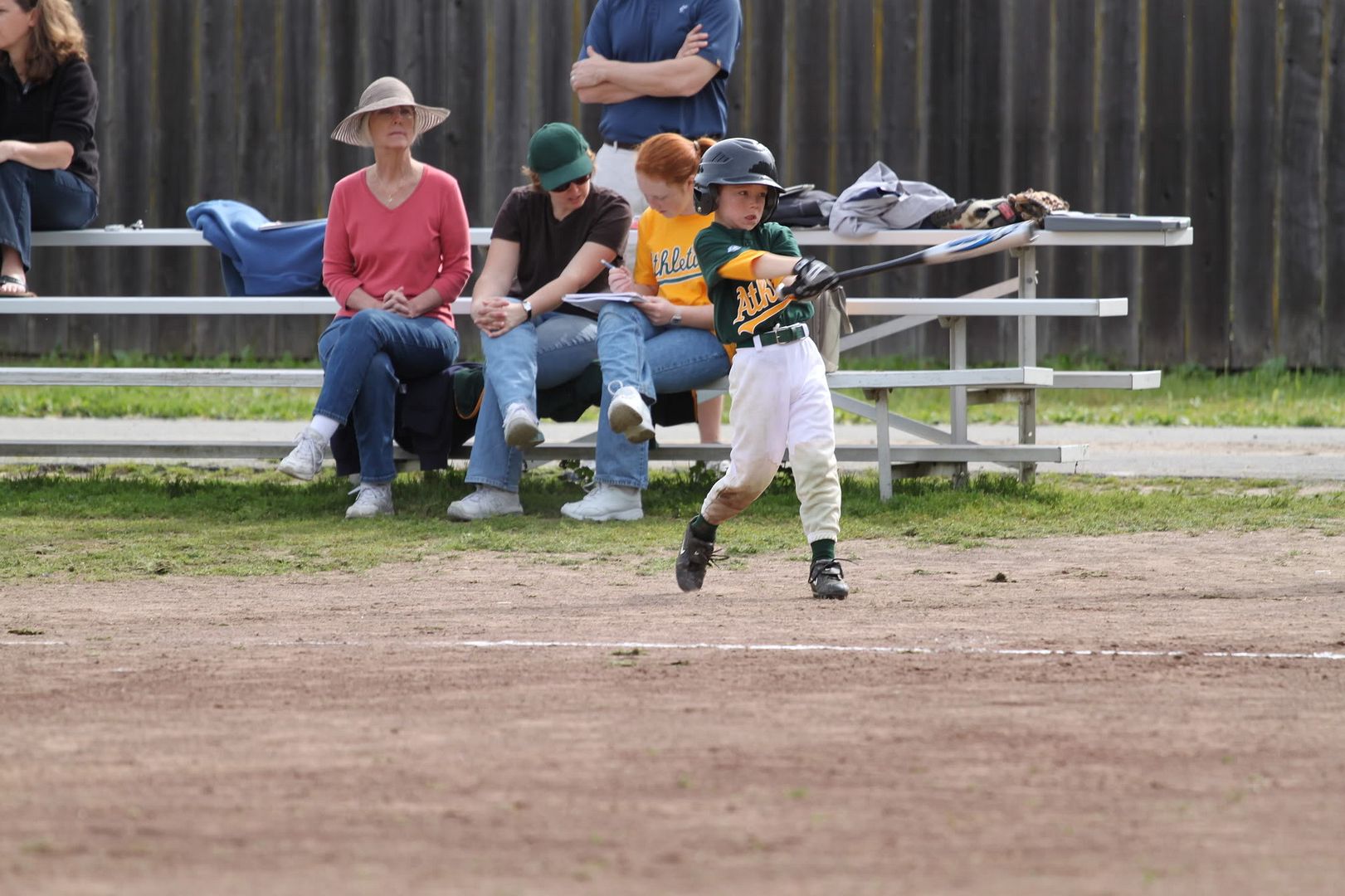
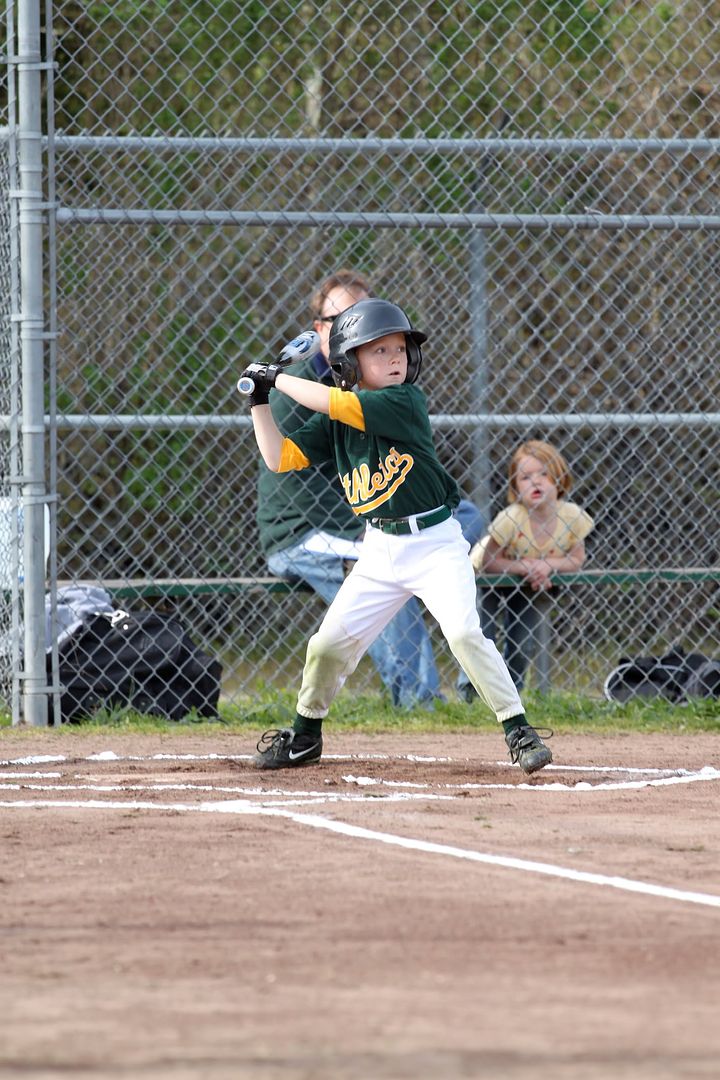
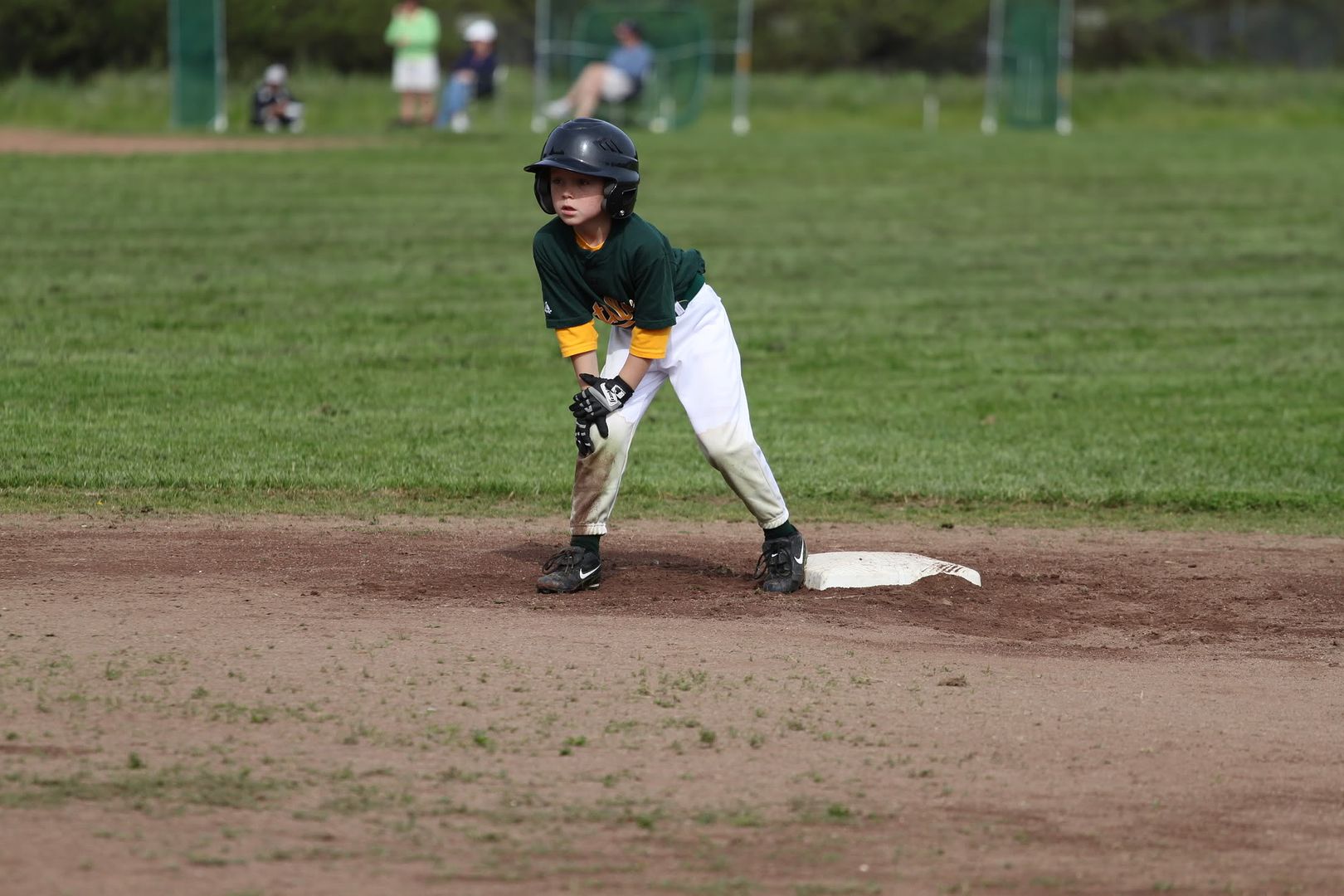
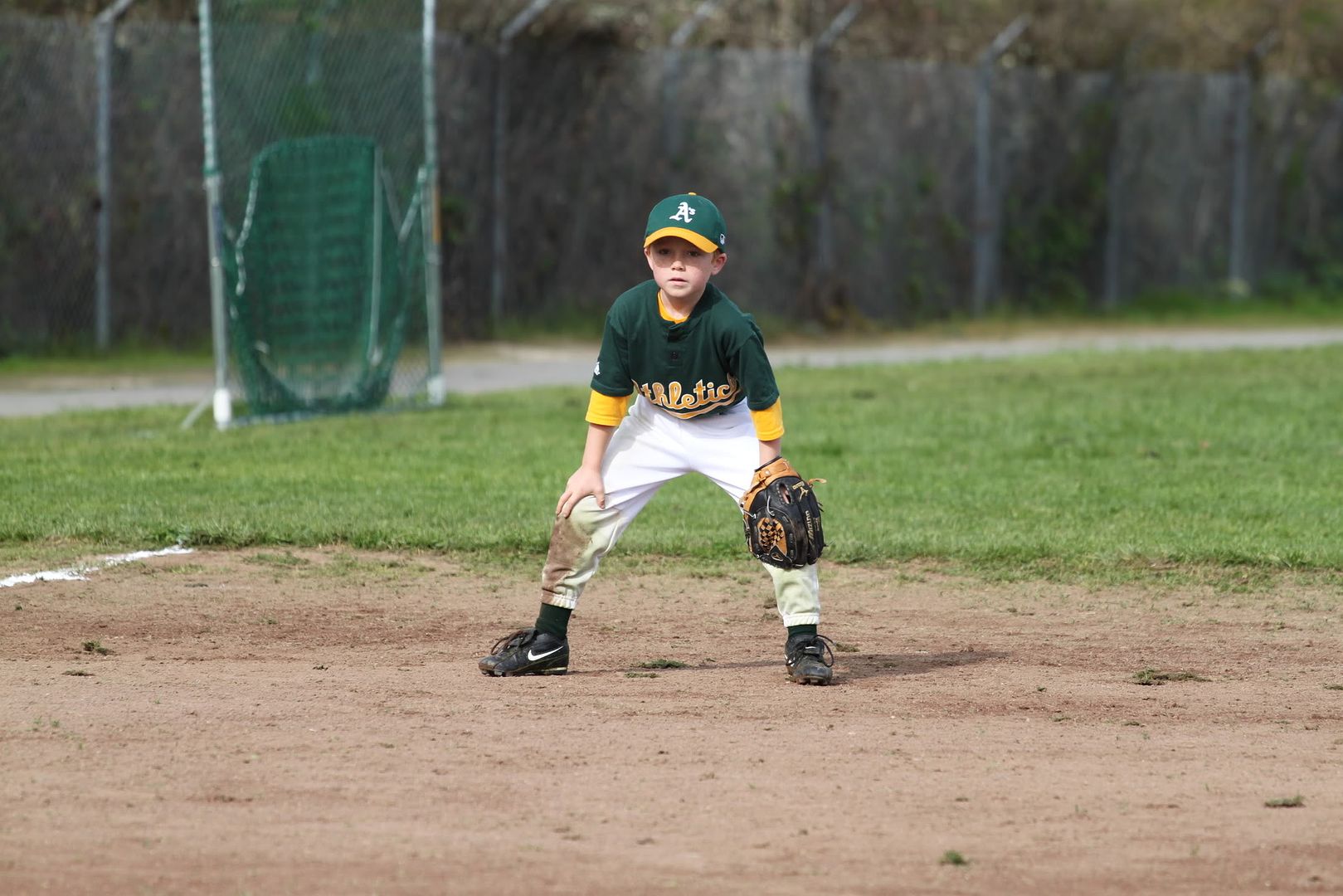
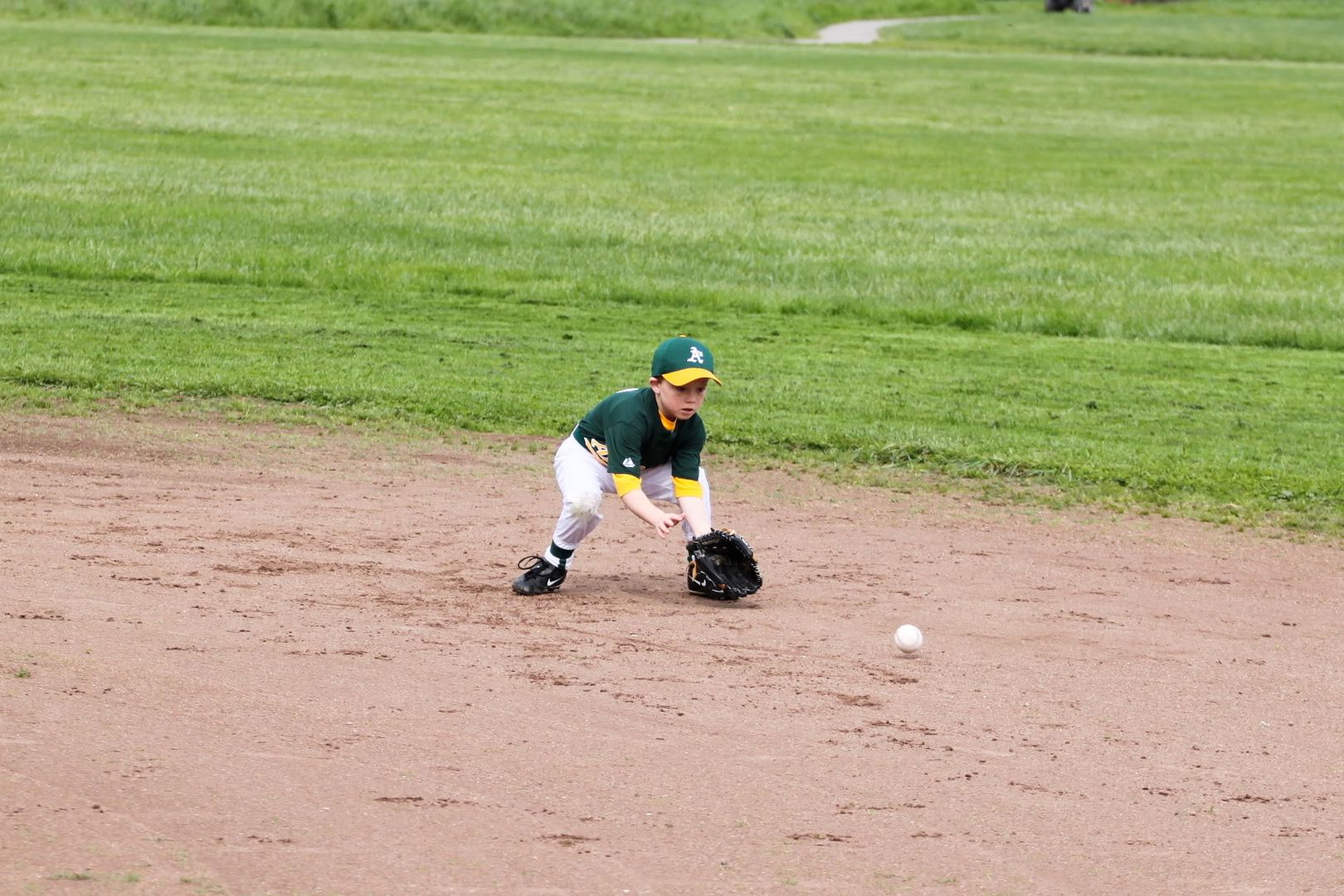
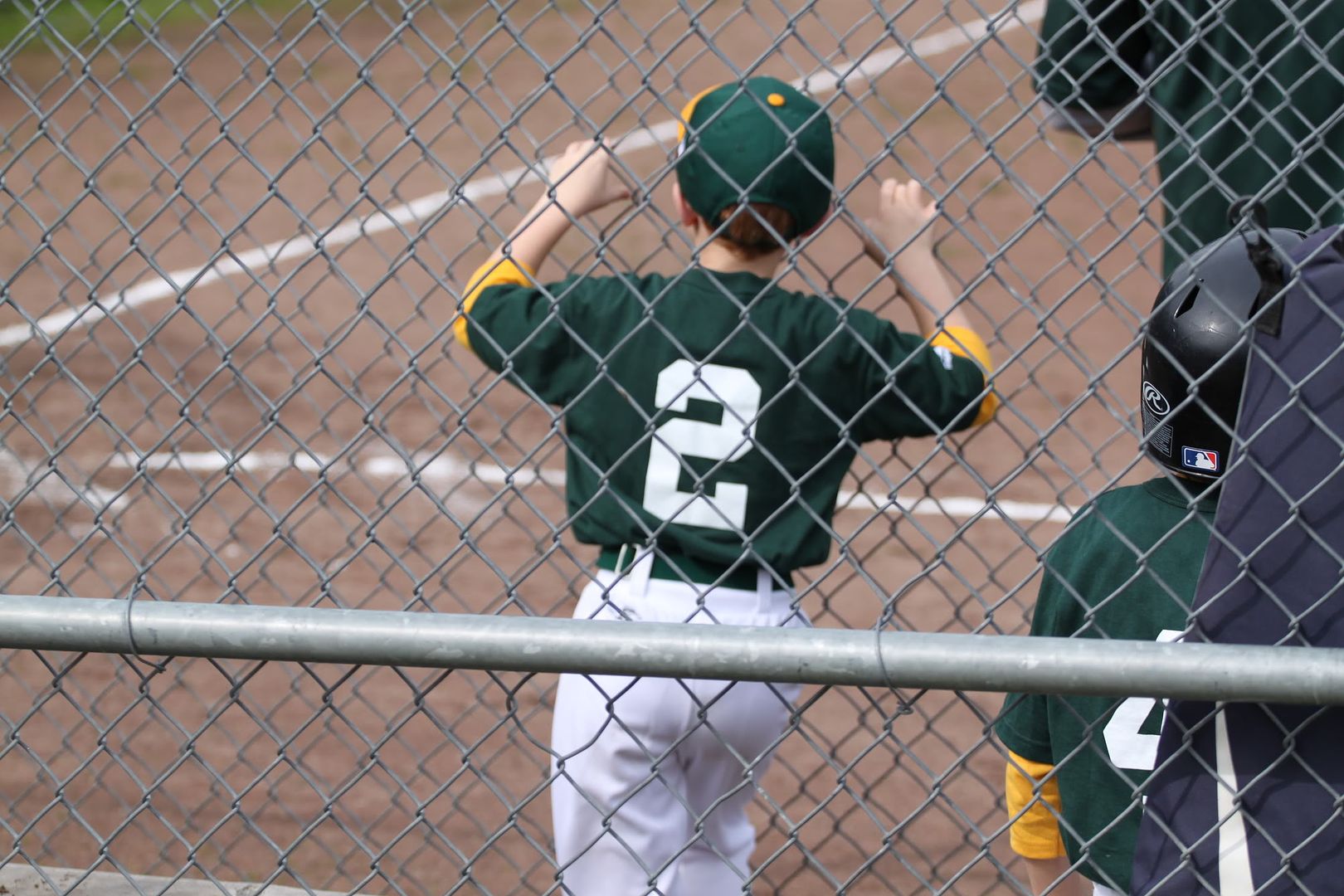
The A's prevailed over the Red Sox 17-5 in the first week, and beat the Orioles 12-4 in the second game, with a rainout in between. Yesterday, the A's obliterated the Yankees 22-2. The game was notable for several things. The least surprising development, based on our practices, was that our bats woke up in a big way. Considering that teams are limited to five runs per inning, and that the A's only batted five times because they were the home team (and did not bat in the bottom of the last inning because of the lead), we scored 22 out of a possible 25 available runs. Michael is not a big hitter, but he hits the ball sharply. He went 4-for-4, with three runs scored and three runs batted in. More significantly, this game confirmed what we were beginning to suspect, that all the work we have done on basic defense is paying off. The A's have given up far fewer runs than any team in the league, and our boys made a bunch of solid defensive plays. The one play that none of us expected to ever see was a triple play. Michael started it by catching a line drive from the pitcher position. He threw to first to double off the runner, then our first baseman (our best player) threw a dart across the diamond to third base to catch the runner leaving from third. That one play showed both skill and smarts by several different players.

Our comeuppance will arrive at some point during the season, but for now, the boys are really showing progress. There is something exceptionally pleasing about watching the boys take infield grounders adeptly and make throws smoothly, and even line up cutoff throws accurately, as they did at practice this afternoon, things that only our best few players could do with any alacrity at the beginning of the season. What matters most of all is when Michael declares on the way home from practice, as he did today, "I love baseball!" As long as he keeps saying that, all the work will be worth it.

Warming up:


The pitch is on its way:


Ready to run:


Manning the hot corner:

Wednesday, March 24, 2010

Gaels Country

The attention that the St. Mary's basketball team has brought to itself by its run to the Sweet 16 round of the NCAA tournament reminds me of why I enjoy college basketball. Little else in the sports world compares to the intense national focus the tournament can bring to schools that would not otherwise garner notice. The unexpected triumph of David over Goliath, when the whole sports world is watching, is a good time, guaranteed. When it happens to a college with an enrollment of 3,500 in a town of 15,000 people, it's a great time. Moraga is abuzz about the Gaels (as much as this laid back town can abuzz about anything), and St. Mary's success has taken the sting out of the failure of the much larger local favorite, Cal, to advance in the tournament.

Click here for video of the team receiving a hero's welcome upon its return to campus in Moraga earlier this week after its memorable, two-win weekend in Providence. (Here is another nice article about the team coming home.) In the video, it is the slightly bashful look on the faces of the first players off the bus that reminds us that these are still boys playing a game. Overnight, their world has changed. For most of them, these two weeks will be the high point of their sporting lives. For one of them (center Omar Samhan, the gregarious kid at the end of the video), a future as a professional athlete that was a laughable thought a week ago may now be a possibility.

Samhan is living everything that is right about this team. He grew up locally, he is outgoing and funny and clearly enjoying everything about this improbable run in the national spotlight, and he is a senior with loads of game experience. Four years of collegiate practices and games have given him moves on the basketball floor that few big men in the college game can match.

(It is so rare for a top player to stay in school that teams with talented seniors can surprise the best teams that are stocked only with underclassmen. Samhan has developed skills in four years that gave him a tremendous advantage over his opposition in the first two rounds of the NCAA tournament. No matter how much high school and AAU ball a top recruit has played before getting to college, talent can only take a player so far against a player who has been through thousands of hours of practice and games at the collegiate level. Cornell, for example, an even more improbable Sweet 16 participant than St. Mary's, relies heavily on smart, experienced upperclassmen.)

Now that St. Mary's is no longer a secret, other teams may neutralize Samhan and clamp down on the Gaels' outside shooters. Even if Baylor (or Duke) sends St. Mary's home, it will take up residence as a happy footnote to this year's tournament.

St. Mary's plays at 7:30 Eastern on Friday. Tune in to see a bunch of guys playing the game well, with joy.

Thursday, March 18, 2010

Giving

One of the unique features of our area is the very sharp delineation between prosperity and poverty. Our three little contiguous communities (Orinda, Lafayette and Moraga) together comprise a tranquil valley of moderate affluence, with Orinda on the high side, Moraga on the low (relatively speaking) and Lafayette somewhere in between. Just on the other side of the hills that shelter Moraga and Orinda lies Oakland, one of the most notoriously poor and crime-ridden metropolitan areas in the country. In truth, there are many nice areas of Oakland, but the majority of the city is governed by gangs and struggles to rise above the material and spiritual poverty that the criminality of the gang culture cultivates.

Those who live in the so-called Lamorinda area are very self-aware of the stark disparity in living conditions between the two areas that are only separated by a one mile long tunnel. There are many readily available opportunities for people of greater means and available time on the east side of the hill to serve those on the west side of the hill. There are rescue missions, soup kitchens and the like which many members of our community support faithfully with their hands and feet as well as their dollars.

Thankfully, the lesson to reach out to others evidently is being taught to the children of our community. A player and former player in the baseball league Michael plays in recently held a donation drive to collect used baseball equipment to give to inner city baseball organizations on the other side of the hill. These two kids collected $30,000 worth of bats, balls, gloves, shoes and other equipment, which has now been distributed to nearby inner city areas.

Direct, meaningful involvement in the lives of your neighbors is how society is best lived and its prospects raised. The plight of the desperately poor kids in Haiti after the earthquake, especially the orphans, affected Michael deeply. Of his own volition, out of his personal empathy for kids his age, he chose to give his old baseball glove to a group of people from church who coordinated a donation effort for Haitian orphans. By the same token, if these local donations not only get a bunch more kids out in the sunshine playing a game instead of waiting for the gangs to swallow them up, but also show some materially blessed kids how to live in kindness and kinship with their peers, there will be hope yet for the generation to come.

March Madness Tips Off

The NCAA men's basketball tournament kicks off again this morning, with a few items of local interest. The most prominent media story is Cal (23-10, 13-5 in Pac-10), which won the Pac-10 regular-season title for the first time in 50 years. However, Cal comes into the tournament like the first runner up in an ugly contest. The Pac-10 was horrible this year; the only reason two Pac-10 teams are in the tournament is because Washington earned an automatic bid by winning the conference tournament -- by beating Cal. Cal was rewarded with a number eight seed, and will face off against talented number nine seed Louisville. With the game being played in Jacksonville, Florida, Cal's prospects for advancement are even money at best.

Of interest even more local to us than Berkeley is Moraga's own St. Mary's. St. Mary's finally forced its way into the tournament after posting a 26-5 record (11-3 in the West Coast Conference). St. Mary's went 25-6 through the conference tournament last year, but did not make the NCAA tournament. The one-game improvement was a crucial one: a win over conference regular-season champion and NCAA tournament darling Gonzaga to earn the conference's automatic bid into the big dance. St. Mary's, seeded at number 10, has drawn a matchup against Richmond, a number seven seed, to be played tonight in Providence. St. Mary's is a better team than most people realize, and they are a strong candidate to pull the upset. (Gonzaga, long a favorite of the NCAA tournament organizers for its consistent runs to the Sweet 16 from what could be described as a mid-major conference only with a large helping of charity, was given a number eight seed and a matchup against Florida State, a game Gonzaga should win.)

Our personal interests run to our beloved Gauchos of UC Santa Barbara (20-9, 12-4 in the Big West), who return to the NCAA tournament for only the fourth time in their history, and the first time since 2002. UCSB won the Big West conference regular-season title and the conference tournament game. For those accomplishments, UCSB received a 15 seed and a matchup against number two seed and likely Final Four contender Ohio State. At least the high-profile opponent will probably mean that the Gauchos gets some airtime Friday night. That is, until the score inevitably gets out of hand. Of course, 15s have beaten 2s before; this would be a fun upset for us. Go Gauchos!

Wednesday, March 17, 2010

Enterprise To Fly Again

The first space shuttle, the Enterprise, will be moved soon from its current home at the Smithsonian's Air and Space Museum Annex near the Dulles airport. The Udvar-Hazy Center will receive the Discovery once its flights have concluded later this year. That means the Enterprise, NASA's approach and landing test vehicle in the early days of the shuttle program and current star resident of teh Udvar-Hazy Center, will be looking for a new home. It will get one more trip atop a modified 747, just as it did back when it proved the shuttle design was viable for a controlled-flight return to earth from space.

The final resting place of the Enterprise has not yet been determined. With any luck, the Enterprise or one of the other three remaining shuttles will be displayed somewhere on the West Coast. It was a thrill to see the Enterprise at very close range (the Udvar-Hazy Center is outstanding); I hope the permanent shuttle displays to come are equally as viewer-friendly.

Friday, March 12, 2010

Stranger in a Strange Land: Prologue

In preparation for our trip to China, I found myself at the Chinese Consulate in San Francisco twice this week. On my first visit, I learned what should have been some self-evident facts. The Chinese consulate in San Francisco is the primary point of contact on this part of the West Coast for anyone wishing to interact with China; consulates handle travel and immigration business of its own citizens, not just that of prospective tourists; and San Francisco has a large population of Chinese nationals and immigrants. I first rolled past consulate at about 1:30 on Monday afternoon, and was able to identify quickly entrance to the visa office by following the line of people -- almost entirely Chinese -- that extended all the way down the block. After finding parking (no easy task) and joining the line myself, I realized that the limited hours of the visa office meant that there was no chance of getting in before the office closed. I resolved to return later in the week and lineup concert-style an hour before the office opened.

On Thursday, I returned to the consulate on a beautifully bright, clear morning and hour before the Visa office opened. Even that early, I was in about 25th place in line; I was also the second Caucasian person in line. Once the doors opened at nine, we all took numbers and were called to separate windows to meet with consular officers to submit the visa paperwork. My officer, a smiling young Chinese woman with the incongruous name of Sofia (according to her name tag), cheerfully approved us for a longer-term visa because the cost would be the same and because it would give us an opportunity to return to China more than once, which she indicated a great thing for us to do. She also got a good laugh out of Michael's application picture, in which he gave his usual charming grin. As a consular officer efficiently processed my paperwork and conversed briefly with me in broken English, I gained some insight into what Greg has been doing, in mirror image, for two years. I immediately regretted not having enough confidence to speak the simplest Chinese pleasantries I have learned.

Judging by the consular officer's reaction to kid's photographs, and my experience standing in line and being inside the consulate, being a distinct racial minority may turn out to be the most profound experience of our trip. It was not particularly surprising that I was at least 6 inches taller than every other person in the long line at the visa office (except for some of the Caucasians). More interestingly, once inside the visa office, the few westerners tended to seek each other out. My unscientific observations were that a few Caucasians in the room appeared to sit near each other and conversed with each other, to the limited extent that anyone was chatting at all. I suppose it is natural to do so if we assume that it is more likely that a Caucasian will speak English. On the other hand, we were still in San Francisco, and presumably many of the Chinese folks in the office would be just as able to speak English.

Do we ever set aside an impulse to align with what we perceive to be our own tribe? When in the comfort of our home, be it a house, school or town, I think even the marginally enlightened among us can feel perfectly at ease (or can learn to be so) with people of any race or creed. However, when we find ourselves away from familiar surroundings, particularly if we are others who are in surroundings familiar to them, it feels natural to cling to anything that is more familiar than the environment. The point of commonality need not simply the race. It could be a common identification by language, school, state or nation.

Experiencing life as a distinct, and distinctive, minority should be an important experience for all of us, and especially the kids. Not only are we Caucasian, but I am significantly taller than typical Chinese person, and the kids have red hair. Plus, will we be in the company of a Caucasian family in which the wife and two kids are blonde. We have had experience with this; Latino women used to follow Cheryl around in the Burbank 99 Cents store just to get a closer look at our redheaded kids. I expect more of the same in Shanghai, at least to some degree. Thankfully, the kids have grown up in places and in an age in which racial identity is neutral for them (unless members of a particular race choose to make an issue of it). Still, the experience of drawing attention to themselves as a result of their race will likely make a strong impression on them.

The visas will be ready next week. Then it will be time to think seriously about how we are going to pack for this adventure. Just what is fashionable in Shanghai this time of year?

Sunday, March 07, 2010

Saturday Sports Highlights

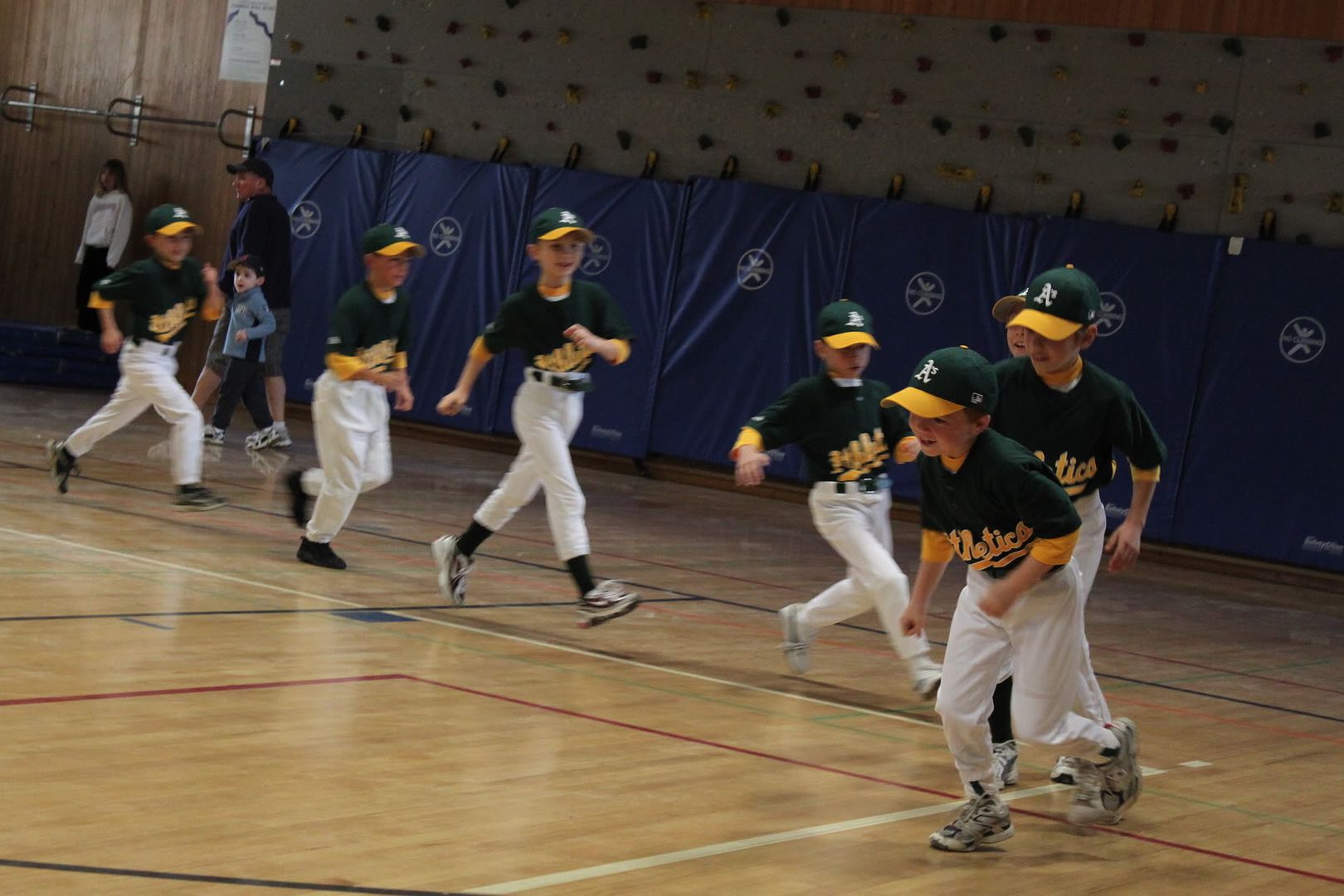
After a wet winter that played havoc with the practice schedule, the Moraga Baseball Association held its opening day ceremonies and first games on Saturday. All of the teams, led by Michael's Pinto-division A's (led by Michael) ran into the junior high gym to applause, raffle prizes and general merriment.


The local high school team, most of whose members played in MBA for many years, were also introduced to the assembly (towering like Greek gods over the little Pinto-level players).

Under grey skies that gave way to warm sun, Michael's Pinto A's took on the Red Sox. As with every other sport in town, they boys know just about everyone on the other teams. After some first inning jitters, the A's got their game into shape and prevailed 17-4. Basic skills like throwing accurately and catching reliably are still a challenge for most kids in the league, but our team showed the effects of active coaching right away with their good slides, outfielders backing up throws to first base, and aggressive baserunning. Michael had a decent game, making a couple of smart plays at second after a rough first inning at the pitcher position. He also got on base in each of his three at-bats, scoring on run and driving in another.


The best thing about the season is that the kid just loves the game.

Thursday, March 04, 2010

Also Turning 40

The Boeing 747.

Bigger than expected, but versatile, and usually makes people happy when they see it. Yeah, that's sounds about right.

Tuesday, March 02, 2010

Further Evidence of the Decline of the English Language

The part of the world that turned "google" into a verb, and gave the world the means to carry out that action, may be on the cusp of adding to the world's scientific lexicon. There is a movement afoot to give a name to numbers of 27 orders of magnitude (27 zeros after the initial digit). The proposed appellation is "hella," a slang term that has its roots in San Francisco, which means, simply, "a lot."

This dubious development is brought to us not by the news parody site The Onion, but is instead a real campaign by a Cal physics student to petition the International Committee for Weights and Measures to add "hella" to the International System of Units. The student is getting his message out to the people through that venerated method of social change: a Facebook petition.

There is no truth to the rumor that a high school English teacher/surfing instructor from Santa Cruz has started a Twitter campaign to convince the Oxford English dictionary to change the superlative form of "better" from "best" to "most epic."

Yet.

Time Keeps On Slippin'

Cataclysmic seismic events have obvious local consequences. They also can have much more far-reaching consequences that are not visible to most observers.

According to a geophysicist at JPL, a computer model of the earthquake that struck Chile last weekend indicates that the shift in land mass from that event has affected the balance of the entire planet. As a result, each day has been shortened by a projected 1.26 microseconds. The Indonesian earthquake of 2004 also shortened the day, by an estimated 6.8 microseconds.

Finally, an explanation; the days really are going faster these days.