The calendar imposes upon nature an artificial sense of
renewal every thirty days or so, and on a much grander scale every 365
days.By the fortuity of a flip of the
calendar page, January is the month when everything starts over, fresh and new.
Poppycock.
January 1st charms, with its parades and football
games.The day is lit less by its own
brilliance, though, than by the leftover glow of Christmas, glad tidings and
good will to all family who don’t see each other often enough and thank God for
these few days off. New Year’s Day stands against shadow, because it marks the end of the seemingly
interminable holiday season, which sputters to a start with tykes in costumes,
picks of steam through the feasts of Thanksgiving and lumbers to its happy
crescendo at Christmas.After a month of
office work slowing down, vacation plans consummated, gifts purchased and given
and idle time rediscovering the people we believe we really are when not
tearing around trying to meet the unstoppable demands of the daily routine, the
gleaming newness of New Year’s Day is a mirage.It is not a day that looks forward to the shine of the year to come, it
is a day that reflects all that came before it.
Because January, truth be told, is a miserable month.February is not worse only because there is
simply less of it.January is dark, cold and wet,
and treats December like a houseguest who has overstayed his welcome.Business that slows over the last six weeks
of the preceding year in deference to the holidays snaps to warp speed to pack the
work of eight weeks into four.Many
students must endure finals in January, after spending the Christmas break
trying to ignore the building dread that they really should be studying during
all that time off. Christmas seems
nearer in June than on January 3rd.
So the weather has generally been sunny for the early part
of this year, Michael has made us all proud by earning a spot on the travel
baseball team and proving by his play that he belongs there, and Kelly survived
finals to turn in excellent grades in a full load of terribly demanding classes.That’s
about the best that can be said for the month this year.I am only now (literally, today) finally
digging out from under what has been the most burdensome, stressful eight week
period of work in my career.And when
the month starts like this, it is not destined to go down in history as one of
my top-ten favorites:
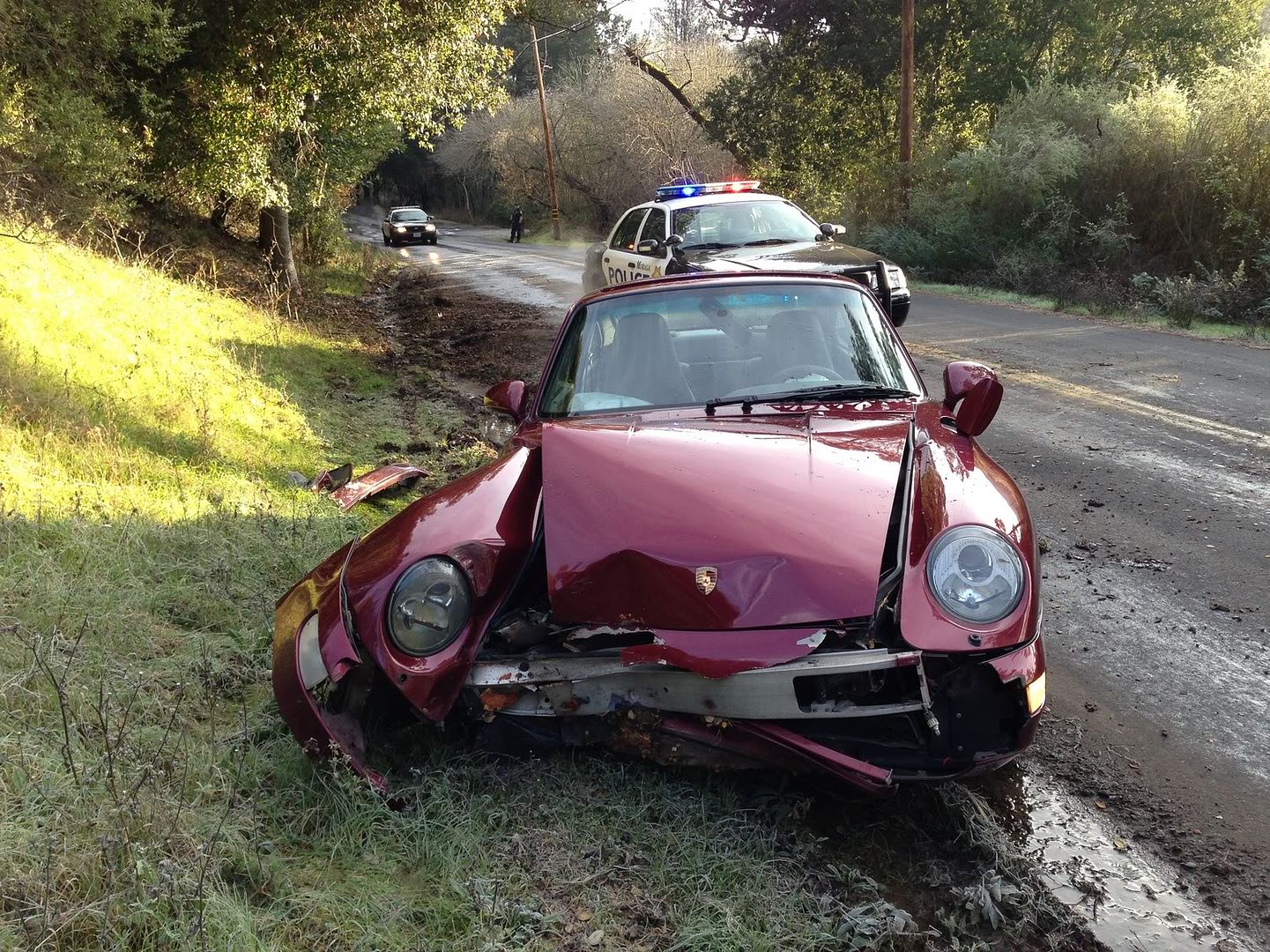
Unscheduled airbag test -- yep, they work
And yet, while I have no desire to live these last couple of
months over again, I can’t help but be content with all we do have, even in this
deepest of winters:our health, our
family, our faith, our jobs, and our friends.
January means baseball, right?Our youth league begins its practices in
February in preparation for the March-to-June season, so the evaluation day to
give the coaches a look at the players they will pick for their teams always
happens in mid-January. This year, the evaluations were last weekend, under clear blue but very cold skies.
The evaluation for Michael was a little different
than in years past.The divisionMichael has moved into is no longer limited to teams playing other teams from within our league.Three teams will compete against each other and teams from the two
immediately adjacent towns.Two
additional teams, divided by age, will compete as travel teams against leagues from a broader local area.The players
trying out for those teams had to attend two days of evaluations rather than
one.They also knew that the rosters for
those teams were largely set before the evaluations even started, based on
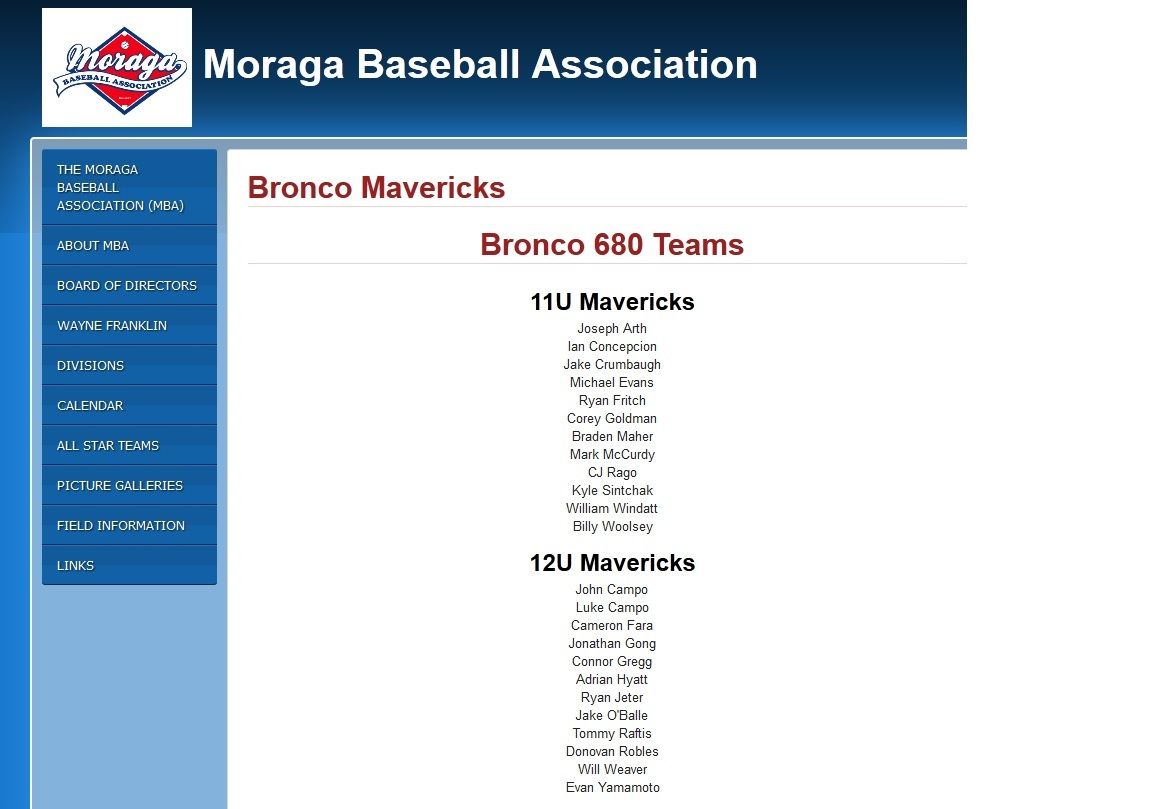
the All-Star teams from last summer.For 11U new team, it was widely known that one of the star players had decided
to play in a different league this season, freeing up one roster spot for the
team. Every other player was planning to come back. The 10 or so kids trying out who
had not already played on the All-Star team last year were essentially
competing for a single spot on the team.
Michael was apprehensive going into the evaluations, as he
usually is.He had a good first day,
though, simply playing the way he knows how to play.His pitching, in particular, caught the
attention of a lot of the dads and coaches.A number of them came up to me to say that they noticed how well Michael
was playing.Some of the boys who
clearly would be on the team told Michael the same thing, offering their
opinion that he had taken the available spot on the team.
After the first evaluation session, Michael was flying
high.He knew he had done well and was
rightfully proud of himself.He returned to
the field in the afternoon with me to help administer the rest of the
evaluations; I could hardly keep him off the field.Michael's coach from fall ball made a point
of telling me that he had spoken with the 11U coach about Michael, and that
in his opinion.Michael was a lock to
make the team.
It was only after the
good first evaluation that Michael allowed himself to want to make the team.I assured him he had done well, but that was always on the bubble. I told him that even if he didn't
make the travel team, he would have a great time on the house league teams, one of
which would be coached by his fall ball coach.He was fine with that, but knowing that he stood a good chance of making
the top squad made him want it more.After second day of
evaluations which consisted mostly of hitting, Michael was nervous that he had
not hit with enough power to wow the coaches. What he didn't see was that a lot of the power hitters performed very poorly against the soft-toss pitching at the evaluation, while he always made solid contact.
All he could think about was the roster announcement Wednesday evening.
Wednesday evening, the call came.Among eleven familiar names, his was the new one for the 11U team.After three years of playing
in this league, Michael has clawed his way to the top.This is a very nice validation of all the
extra work he has put in to improve. He is a fun-loving kid,
but there are not many out there who listen to coaches better or train as seriously
as he does.He could not be more happy,
and we could not be more proud.
It's official
Now, of course, the hard work starts.He will get a uniform with his name on the
back, but he will also be expected to play at a very high level.It seems daunting, but I believe he's up for
the challenge.As I constantly tell him,
if he simply plays the way he knows how to play, he will give the team what it needs.Plus, with expert coaching and
excellent teammates, he should make rapid progress in his own development.I suspect games will be a bit more tense than
they used to be, as the play transitions from purely recreational to largely competitive.However, all these boys feed off of
competition, no matter how nervous it
may make them.Whether I will survive the
season is a different story entirely.Thankfully, all I will have to do is go to games and take pictures.
Best of all, Michael's peers made it known at the evaluation how glad
they were that it looked like he would make the team. He drew more
satisfaction from that than anything else. We all yearn for a place to belong, and that place is almost always defined by who occupies that space with us. Sports may be in many respects a world of artificial urgency and ad hoc camaraderie, but the bonds between peers are real. Right now, before any strikeouts or errors, hits or wins, the joy of making the team matters most of all.
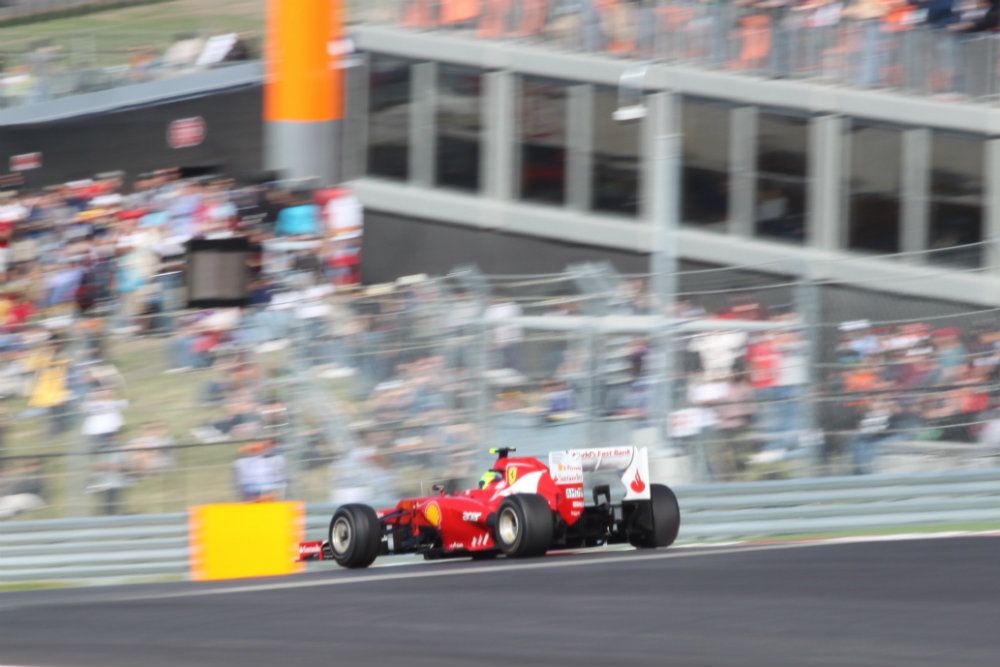
It escaped the attention of most American sports fans and
nearly all other Americans, but Formula One returned to the United States in
November.Not only that, the F1 circus
came to a brand-new, purpose-built track constructed for that very purpose just
outside of Austin, Texas, something unprecedented in American sporting history.In the motorsports world, this was a Big
Deal.Amazingly, I was able to be a part
of the race weekend.
My friend Kevin was not only my baseball co-coach and
Kelly's last soccer coach, he is also an auto enthusiast of the first
order.We first connected in a way that
went beyond youth sports at one of Kelly's soccer games when he drove his race-prep
Audi to game.I noticed the track number
decals on the car, struck up a conversation about it, and a friendship borne of
a shared, unusual hobby began.
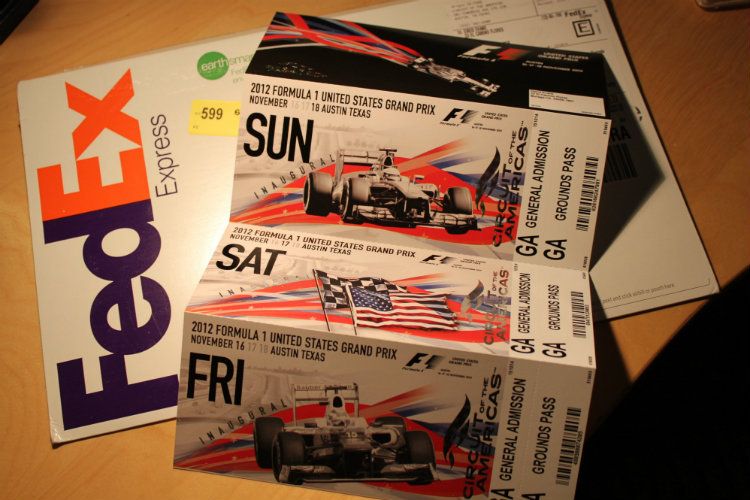
With the US Grand Prix scheduled for November, tickets for
the event went on sale in April (when the track was still very much under
construction).Kevin alerted me to it
and proposed that we both go to the race.It was a no- brainer for me, pending approval from Cheryl.She graciously gave me a hall pass for the
weekend, recognizing how excited I was, even though, even after more than 20
years of being around me, does not understand the appeal of auto racing.With that, we booked hotel rooms in San
Antonio (Austin hotel rooms were scarce and pricey, and San Antonio was only an
hour away), booked the flight with frequent flyer benefits, arranged for a
rental car, and then sat back and waited for six months.
I'm really going!
When the weekend finally arrived, we flew directly to Austin
and stayed Thursday night with one of Kevin's colleagues and his wife, a
sociology professor at the University of Texas.Kevin obtained his masters degree at UT, so he and his friends had a lot
in common to talk about and fun little haunts to show me around town.We had a great evening in their home, and did
our best to explain what the whole Formula One thing was all about.The people of Austin have lived with the
battles -- political, financial and otherwise -- to get the track built in
their community, and the day of reckoning had finally arrived, bearing with it
a sport and personalities about which the locals knew almost nothing.
After a very fun evening, we headed to the track Friday
morning.The track was built out of
scrubby ranchland a few miles east of Austin.The biggest fear for all who would be attending was access, as there are
only two or three small rural roads that went to the venue.The organizers arranged for hundreds of buses
to run between the track and the city, which did an admirable job of
alleviating traffic congestion over the course of the weekend.We opted for a parking pass, and had no
trouble getting to our assigned parking lot.
It had been years since I had been to a professional auto
race, and I was as giddy as a five-year-old pulling into the parking lot at
Disneyland.We arrived just as the first
Friday morning practice session for the Formula One cars was coming to an end.Grinning like an idiot, I rolled my window
down as we parked just to hear the scream of the race cars' engines.Those engines, incidentally, are
mind-bogglingly loud.Ear protection
makes the whole thing easily tolerable, but being around those cars driven in
anger with my ear buds out made me very glad I had them.
We spent the entire day at the track, exploring nearly all
of the grounds for the best vantage points.All the while, the track was filled either with Formula One cars, or
cars from the supporting races, including the Ferrari 458 Challenge series, a
Porsche Cup series, and vintage (1965-1983) Formula 1 cars.After the last practice session in the
afternoon, we drove to our hotel in San Antonio using the brand-new 85 mph toll
road, which took us about halfway to San Antonio.The road was a marvel: gentle curves through
low rolling hills, no billboards, the strip malls, and no traffic.Oh, and an 85 mph speed limit.
In San Antonio, we stayed along the Riverwalk.That may be a cliché, but it was fun to be
among tons of other race fans.The tire
manufacturer Pirelli posted an enormous contingent of their personnel in our
hotel, and many other fans were in evidence, sporting various automotive and
racing-affiliated gear.We fielded
questions from several people who were trying to figure out what all the fuss
was about.
Saturday morning the hightailed it back to the track to
spend the day watching more practice sessions and the qualifying session for
the races.The race was next to last on
the calendar for the season, and the battle for the driver’s championship was
close but could be determined at Austin, so there was a lot of intensity
surrounding the Formula One qualifying session.Surprisingly, even though the live experience at an auto race is much
different than the televised experience, in that there is no commentary and it
is difficult to know what is going on out the far reaches of the track, the
many video boards and rentable real-time telemetry gadgets did a good job of
keeping us informed of each new development as the best drivers topped each
other to reach pole position.
After another full day (and a pretty pronounced facial
sunburn), we stayed in Austin for dinner and to explore the fan events that
took over downtown Austin.We also had a
chance to walk around the legendary Sixth Street, where live music tumbled out
of nearly every doorway.
Race day dawned just as every other day had: comfortably
warm with not a cloud in the sky.Attendance at the track increased each day, and peaked on Sunday at
about 117,000 spectators.We encountered
some traffic entering the track, and there were many more people that found our
chosen seating area on a large slope overlooking turns 19 in 20, but overall
the crowds were not a problem.
The race
itself was tense and dramatic, as the championship leader was unable to hold
off a strong challenge from a rival, guaranteeing that the championship would
not be resolved until the next race.All
told, the racing all weekend was excellent; the venue, while barely finished,
was terrific for the drivers and spectators alike, and even the feared traffic
hassles failed to materialize in any significant way.
Although the event was the United States Grand Prix, held at
the Circuit of the Americus, it might as well have been the Grand Prix of
Texas.Half of the food concessions were
Texas barbecue, the national anthem was sung with the twangiest of country
twangs, and instead of traditional baseball caps emblazoned with the sponsor's
logo, the podium finishers received massive cowboy hats … emblazoned with the
sponsor's logo.The drivers and teams,
by all accounts, had a great time, enjoyed the region and the festivities, and
loved the new track.It all bodes well
for the future, although it remains to be seen whether races over the next
coming years will draw as well as this year's did.I expect many people were like me, looking to
fulfill a long-time dream of attending a Formula One race.Having done so, I and many people like me
will probably not go back every year.It
would be a shame if attendance declined, because the event is well run, the
track is a great venue and the overall experience is that of a top-notch
sporting event.
For those who like this sort of thing, the opportunity to
see vintage old racers like these take the track at speed was an unexpected and
welcome pleasure:
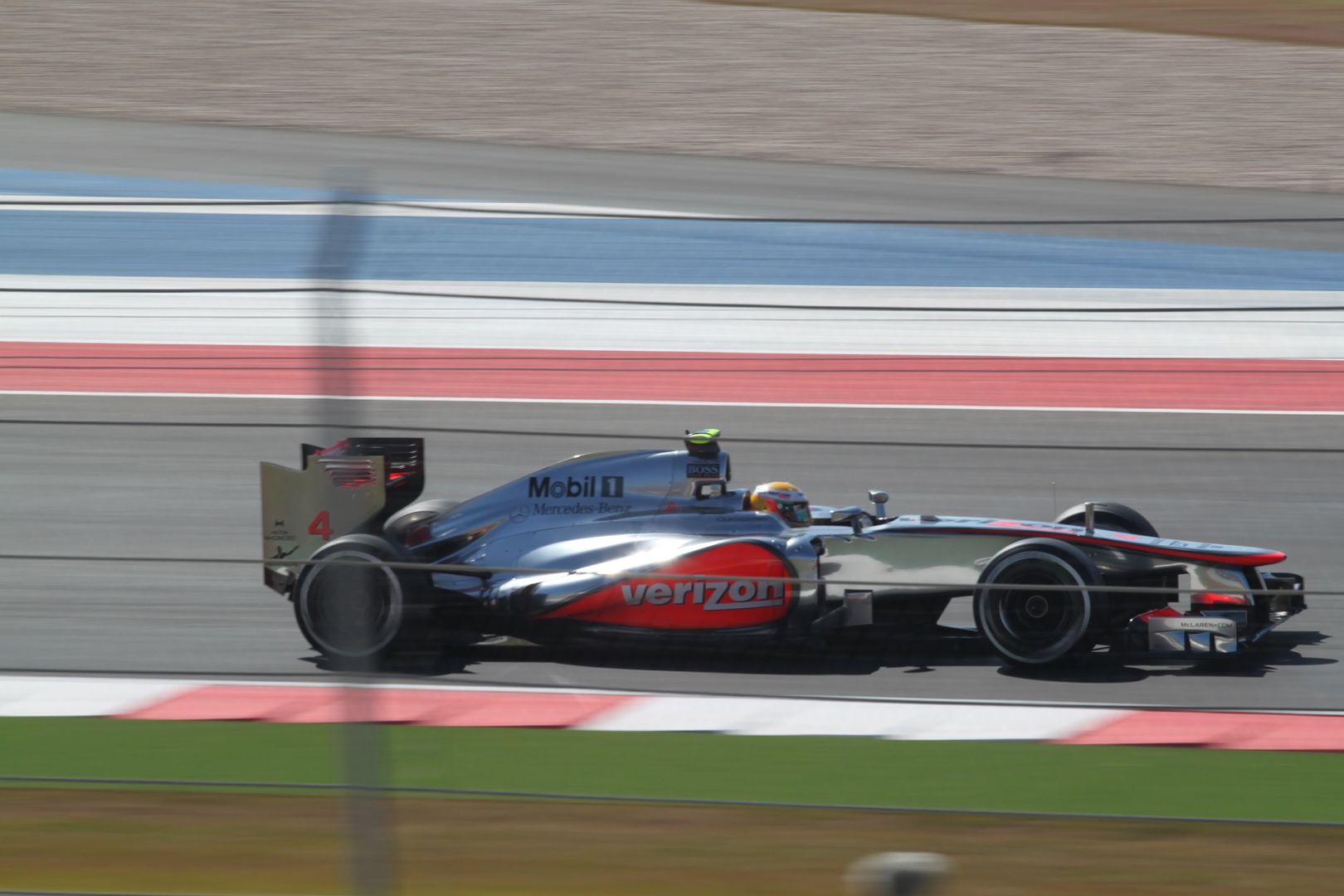
Of course, we were all there to see these guys:
These short clips do not begin to convey the noise these
things put out, nor does it transmit the excitement that comes from
experiencing these beasts rip into view and hammer away into the distance, but
it is at least a sample of some of what we saw:
Historic Racers:
The Race:
Boring?Not a chance.
Anyone who has been enthusiastic about anything knows that the enjoyment comes
from knowing and understanding the details.By the end of the weekend, we could identify several teams just by the
sound their cars made (and, knowing those teams, where they probably were in
the running order).It was a
spectacularly fun weekend for me, partly because I enjoy this sport, and partly
because it was the first “boys’ weekend out” I’d had in about a dozen years.Other than trashing my phone the morning we
were to leave (there’s another story), it was an absolutely perfect trip.
Our boys only ended up with one win on the season. They never stopped competing, though, and showed good spirit. Some of the players, Michael among them, showed distinct improvement over the course of the abbreviated season as they all adjusted to the larger diamond.
Michael carried a hitting streak all the way through the season, ending up with hits in all ten games, hitting .500, stealing a bunch of bases, scoring a bunch of runs and driving in a few (I abandoned my hyper-aware stat keeping for the fall). His defense, which was always strong, improved during the season. As the regular shortstop, he struggled at times with runners leaving from second crossing in front of him as he prepared to stop the ball. After we talked it through and analyzed how to handle that situation, he made several outs in that exact situation (they had a lot of runners get to second base against them) late in the season. He made a point of mentioning that he worked hard mentally on that scenario and was pleased that his own work paid off.
Michael's pitching was up and down over the course of the season. It was never terrible, but some days he was a little too hittable because he doesn't yet have the fastball to make big kids swing and miss. Still, the manager liked to use him as a closer because he was one of the pitchers least likely to issue a lot of walks.
The case in point came in the final game of the season. The game was played on the day daylight savings ended, so daylight was suddenly at a premium for a game that started as usual at 3 pm and was scheduled to run two hours and fifteen minutes. Before the sixth inning started, the umpire called the managers together to discuss how much more of the game would be played, since the light was fading fast. It was clear the game would not go a full seven innings, but our boys wanted a last chance to bat in the bottom of the inning (they were losing, but not by much), so the umpire agreed to play the sixth inning. He asked the teams to keep things moving along, though. After another pitcher got into some trouble, retiring only one batter and leaving a runner on second, the manager brought Michael in. Michael had been frustrated by the umpire's wide strike zone as a hitter. As you will see, though, he used that (and the umpire's impatience to get home before dark) to his advantage:
Two batters faced, eight pitches, six strikes, two strikeouts. Pretty efficient work for less than two minutes of real time, and very smart pitching. He explained afterward that he knew the umpire had a wide zone, and worked the first batter outside before striking him out with an inside pitch -- as intended.
All told, it was a pretty nice way to end the season, even one in which the team only won a single game. Michael has a lot of development to do to be a strong player at this level, but he held his own for the most part against much bigger boys, and showed himself to be one of the best of his age group. It will be very interesting to see how he measures up against the rest of the league when the full season gets underway next month. He has always been in the midpack of his age group, but as he has developed strength to go with his generally good technique, he has crept up the leaderboard. He still needs to work on some positioning instincts on defense, and arm strength will come as he grows, but going .500 for the fall season, with a double and a triple, is a major step forward for him.
Astonishingly, evaluation day for the spring season is only a month away. Time to start tossing the ball around again
After what can only be described as a breakout dominant
soccer season last year, Michael moved up a division to the fifth/sixth grade
level.In a little pre-season backroom
maneuvering in which one team was disbanded and the players distributed to the
two remaining teams, Michael was snagged by his coaches from two seasons ago.They like him and appreciated his work ethic
and talent, but I don't think they fully appreciated how far he had come as a
player in the intervening year.The only
question was whether returning to the younger side of the division would slow
him down.
The answer, emphatically, was “no.”Reunited with several of his teammates from
two seasons ago, Michael quickly found a place for himself as a top forward on
the team.Among younger players, strong
players are marked by their ability to dribble through other teams.At higher levels, the ability to see the
field and make passes starts to become the hallmark of great teams and players.Michael has the all-around game; he has a big
leg and power with both feet, but he also has better passing instincts than
most players his age.Michael quickly
fell into a rhythm with several of his teammates where they looked to pass to
each other as they moved down the field, and all of them could finish with
skill.The fact that Michael was one of
the younger players was no longer relevant.
The season had its ups and downs, and started particularly
poorly because the first two games were against teams that, it turned out once
the season is over, were by far the best teams in the league.Once we started playing teams that were more
evenly matched, our boys held their own.They scored some high-scoring wins, some tight wins and losses, and two
absolutely thrilling draws.In one game,
our boys played most of the match with their backs against their own goal,
fending off a relentless attack and unable to break out to set up an attack of
their own.They went down 2-1 late in
the game. Somehow, though, in the last
ten minutes, our squad started to dominate the run of play.Michael and a couple of his cohorts had
multiple open runs down the field and several shot opportunities.Still, despite close plays, they could not manage
to put the ball in the net.With the
referee glancing frequently at his watch, one of our guys delivered the ball to
Michael on the left wing.He sprinted
down the field, cutting to a stop at the corner of the penalty area to clear
the defender who was pursuing him.Spying a teammate drifting toward the far post, Michael delivered the
ball into the goal area.The ball did
not go exactly where he wanted, flying too close to the goal for his teammate
to reach it.However, in a happy
accident, the ball was struck with enough pace and in just the right location
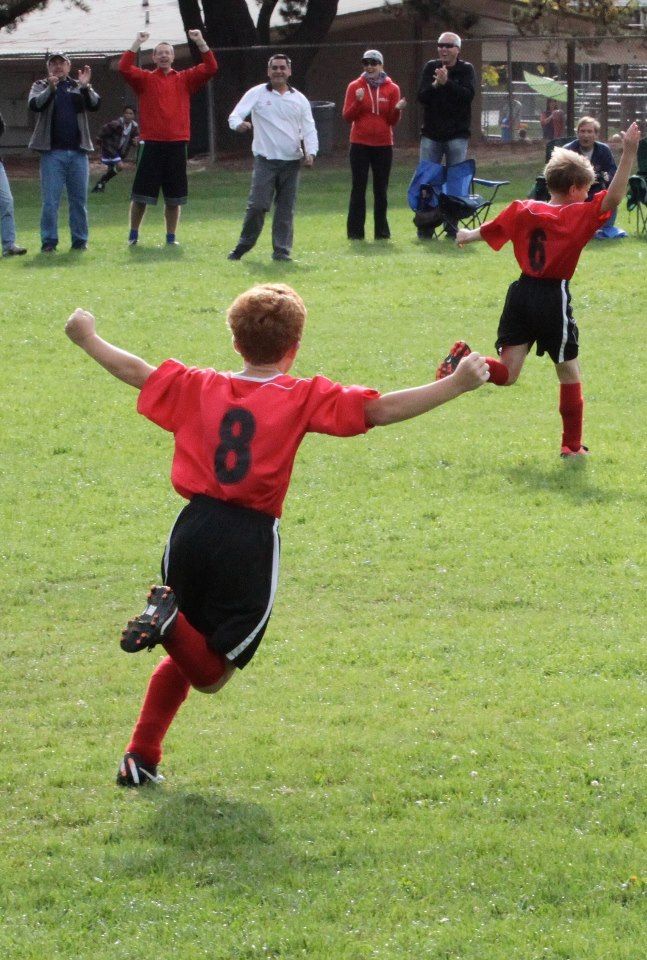
to skip past the keeper and into the far corner of the net.The players' (and parents’) joy was immediate
and genuine.
The kid celebrates with style
The opposing team was only able to kick the ball off before
the referee blew the final whistle.That
draw was every bit as good as a win.
(The end of that game saw a remarkable and disappointing bit
of gamesmanship by the other team.Having scored late to go up 2-1, a player on the other team delayed the
kickoff by intentionally untying and re-tying his shoes to run the clock
down.It was what could be called a savvy
move, but for youth sports, it was a bit over-the-top.When Michael scored his game-tying strike,
the same player sprinted into the goal to retrieve the ball and dashed back to
the center circle to try to restart play before time ran out.He was the other team's best player, and his
behavior in the two post-goal moments showed clearly that he knew how to
manipulate the game clock.)
The final game of the season was a wild, full-field affair, with
close goals, long-range goals, near misses, dramatic saves, and good play all
over the field for both teams.They kept
Michael bottled up for most of the game, but in the second half, his coach
encouraged him to be more aggressive in making runs at the goal.That was all he needed.In one beautiful sequence, he retrieved the
ball near the half line, deftly dribbled through the other team's best defender
by deking him with the outside of his foot, then finished the play with a slick
left footed pass to a trailing teammate who put the ball in the net as the
keeper came out to challenge him.That
brought the team back to a 4-3 deficit.Only minutes later, he was involved in a corner kick that saw one of our
kids with the least raw talent getting a rare taste of life in the forward
position poke the ball past the keeper for the game-tying goal, once again at
the death.The game ended as Michael was on yet another run toward goal, using his head to pop thebouncing ball behind his defender where he chased it down to prepare for a cross just as the whistle sounded.
There is something pure about the natural drama of sport,
whatever the level, that is a joy to
those who are lucky enough to be there to see it.The honest and unrestrained glee of little
boys, whether they are five or 15 or anywhere in between, is worth the hours
spent on cold, wet Saturday mornings.There are no agents, media, Twitter accounts or performance-enhancing
substances any stronger than Capri Sun to get in the way of the raw
emotion that comes from the purity of achieving team goals through individual
effort and talent.
To cap off the season, Michael's coaches chose him to be one
of three players from our team to play in the All-Star game.He had the opportunity to play for men who had coached Kelly in volleyball several years ago, and they remembered Michael as the little brother who ran around playing pretty impressive volleyball for a
second grader.He proved his mettle,
even as one of the few fifth-graders on the field in the All-Star game, by
scoring a goal in his team's victory.
On the season, Michael scored seven goals, fully 25% of his team's
output, with a like number of assists.Although baseball remains his favorite sport in general, he loves
playing soccer most of all.He even turned
down an opportunity to step in with the tournament baseball team for a weekend
in the fall because it would have caused him to miss one of his soccer games.
Any time you find something that gives your kids
confidence in any area of their lives, you embrace it. Soccer was essential to Kelly as the source
of identity and confidence even as a young girl. Michael tends to carry himself with more
self-assurance in more areas than Kelly, but even for him, soccer holds a
special place in his life. We could not
be happier for him.