Tuesday, April 24, 2007

Now Departing from Dock 1 ...

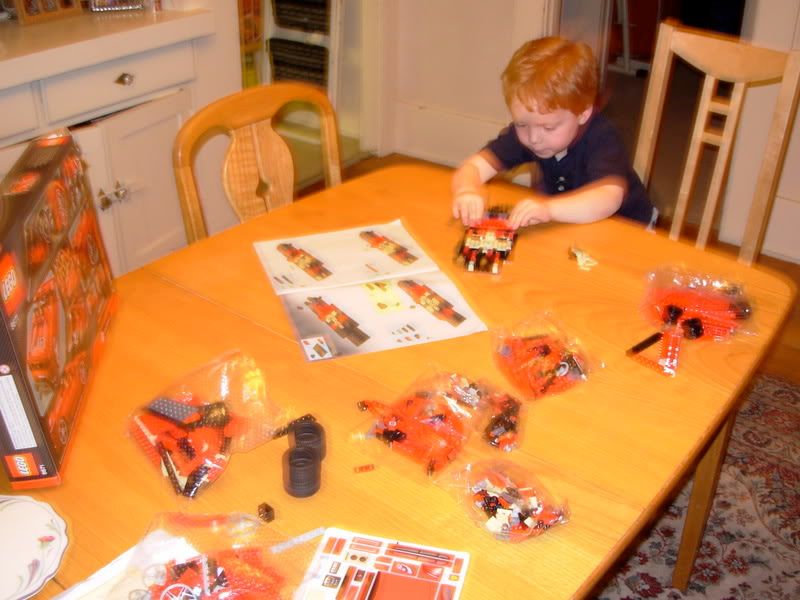
It has been touch and go for weeks now, with a trial standing in the way. However, I'm relieved to be able to now look forward to this:


and this:


and this:


If that scene seems vaguely familiar, that's because it is.

Grandma and Grandpa are taking all the grandkids and their parents on one of those trips that we will all remember forever. And I came this close to missing it.

Friday, April 20, 2007

Hybrids are Great -- Ow!

A new section is currently being written in the Law of Unintended Consequences. Automobiles using a so-called “hybrid” powertrain, which combine a conventional internal combustion engine with a battery-powered electric motor, are all the rage these days. There are a select few systems on the market, principally offered by Honda and Toyota (which licenses its technology to Ford and Nissan). The Toyota system’s unique feature is that, unlike the Honda, under the proper conditions it can run on the electric motor alone.

Toyota’s unique engine/motor management system is good for fuel conservation, at least around town, but not so good for pedestrian safety. Have you ever been near a Prius as it was driven into or out of a parking space? Absolutely dead silent. That’s quite an achievement, until you realize that one of the senses we use when walking about in the presence of cars is the sense of hearing. Without thinking about it, we are attuned to be wary of what we hear in parking lots, knowing instinctively that cars can approach without us seeing them.

The Prius and its kin render this sense of self-preservation useless. I was recently startled by a Prius backing up in the small parking lot of Michael’s preschool. It had pulled almost completely out of its parking space as I walked nearby before I noticed it, because it made no sound. I hate to sound like a nanny-state advocate (whose adherents have succeeded in adding weight, complexity and ugliness to cars the world over – another post), but these things really should have some sort of warning beeper when they are operating in reverse, at which time the driver’s outward vision is more limited. After all, even golf carts, which are louder but much lighter than a Prius, typically emit a raucus beep or buzz whenever reverse is engaged.

I have a tangential connection to a major development in this area. Surely you have been awakened by the obnoxious bleating of a garbage truck or other heavy vehicle as it reversed. That noise is prescribed by law in California in no small part due to a tragedy that befell a schoolmate of mine. When I was in junior high, the older brother of one of my classmates was killed by a garbage truck that was driving in reverse, without audible backup warnings, on the wrong side of the road. I recall an assembly at which his death was announced and explained to the students; a scholarship was created shortly thereafter, of which someone in my class was the first recipient. More importantly, my classmate’s mother lobbied the California state legislature until the vehicle code was amended to require garbage trucks to be equipped with audible backup warnings. Vehicle Code section 27000(b) exists because of her efforts.

While a Prius does not have the mass of a garbage truck, a small child is in just as much danger, and would be difficult for a driver to see. I don’t ordinarily push for government-mandated devices on cars, but unless Toyota and other hybrid or electric car makers voluntarily install audible warning systems, a tragedy that would have been simple to prevent is going to result in just such legislation.

Monday, April 16, 2007

Book Review: Cormac McCarthy’s “The Road”

Cormac McCarthy has long been described as this generation’s William Faulkner (it is not accidental that McCarthy’s first major editor had been Faulkner’s). In simple terms, that means he eschews conventional rules of grammar, and is difficult to read. In a broader sense, however, while McCarthy’s writing carries some of the same brutal weight of Faulkner’s best work, McCarthy is a unique voice in American literature, a true living classic. His recent novel, “The Road,” has a chance to be one of the most discussed and dissected novels of our day, although perhaps not for the usual reasons.

I have read a couple of McCarthy’s breakthrough novels, “All the Pretty Horses” and “The Crossing.” In both novels, the desolation of the bleak south Texas/northern Mexico landscape is matched by the spare yet richly textured prose and thin dialog. McCarthy has been fairly described as a most masculine writer, chronicling the exploits of dusty, hard men in fraught circumstances, who communicate in fragments of sentences. “The Road” follows in this vein, following the journey of “the man” and “his son” through a landscape for which the term “bleak” would bestow a sense of joy and comfort the setting does not deserve.

“The Road” has come to the attention of the average reader in part due to its somewhat inexplicable inclusion recently in Oprah’s Book Club, and as of today because it won the Pulitzer Prize for fiction. Ironically, I found the book on a rack in an airport last week, and, knowing nothing about it, bought it because of the author and before I noticed the Oprah seal of approval (which might have put me off buying the book, snob that I am). Oprah viewers, I’m sure, and others drawn to the novel because of its awards and the author’s pedigree are likely to be in for a shock. While ultimately deeply affecting, “The Road” is not an easy read. Oh, it is a fast read, as it is actually relatively short (I managed to get through it in about four hours), but rather than tricks of grammar, it is the subject matter that troubles the reader.

“The Road” takes place in somewhere in the southeastern United States at an indeterminate time following a nonspecified holocaust. Just about everything living thing on or in the earth has been annihilated. Those humans that remain (as it does not appear that any other form of life survived, save one dog glimpsed from afar for a moment) are reduced to terrifying bands of cannibalistic savages who roam the still-smoldering roads, or terrified individuals who stay in hiding away from the roads and who must go to scarcely imaginable measures to survive. Into this searing, seared landscape of endless ash and unrelenting gloom, the man and his son travel to the unnamed coast in search of … what? In the end, all that matters is that they cannot stay where they are, wherever it is they happen to be.

The author has stripped the land completely bare. Every place the reader would hope that the man and his boy would find something with life, something that represents hope, McCarthy takes it all away. The man of the story must be clever, determined and downright lucky at times in his efforts to provide food, shelter and clothing for himself and the boy, who constantly hover on the edge of starvation. McCarthy is also not above shocking the reader, in the brief glimpses one would take upon unexpectedly encountering the detritus of a car crash, with imagery that man, boy and reader all wish could be unseen immediately thereafter. The oppressiveness of the falling ashes, the cold, grey skies, the endless, hopeless hunt for food, and the constant fear of exposure to any other person eats away at the reader. Against this hideous tableau, a father lovingly looks after his son. Here is a sample from the first part of the book, starting with the very first words:

When he woke in the woods in the dark and the cold of the night he'd reach out to touch the child sleeping beside him. Nights dark beyond darkness and the days more gray each one than what had gone before. Like the onset of some cold glaucoma dimming away the world. His hand rose and fell softly with each precious breath. ...

When it was light enough to use the binoculars he glassed the valley blow. Everything paling away into the murk. The soft ash blowing in loose swirls over the blacktop. He studied what he could see. The segments of road down there among the dead trees. Looking for anything of color. Any movement. Any trace of standing smoke. He lowered the glasses and pulled down the cotton mask from his face and wiped his nose on the back of his wrist and then glassed the country again. Then he just sat there holding the binoculars and watching the ashen daylight congeal over the land. He knew only that the child was his warrant. He said: If he is not the word of God God never spoke.

When he got back the boy was still asleep. He pulled the blue plastic tarp off of him and folded it and carried it out to the grocery cart and packed it and came back with their plates and some cornmeal cakes in a plastic bag and a plastic bottle of syrup. He spread the small tarp they used for a table on the ground and laid everything out and he took the pistol from his belt and laid it on the cloth and then he just sat watching the boy sleep. He'd pulled away his mask in the night and it was buried somewhere in the blankets. He watched the boy and he looked out through the trees toward the road. This was not a safe place. They could be seen from the road now it was day. The boy turned in the blankets. Then he opened his eyes. Hi, Papa, he said.
I'm right here.
I know.


Remember “bleak?”

And yet the relationship between the father and son redeems both them and the story. The tender yet murderous determination the man shows in caring and providing for his son tugs every bit as firmly on the heartstrings as the richest, most lush Dickensian serial. The boy struggles to come to terms with his father’s fierce loyalty to him that includes a aggressive dismissal of any and all other beings that place themselves in his path. The boy, who cannot share his father’s memories of the world we know, innocently implores his father to intercede on behalf of the few others they encounter, and must learn to understand how the man, who will do anything for his son’s sake, will exhibit the worst forms of self-preservation when faced with other lonely stragglers.

It is too simple to label “The Road” as merely a fine novelist’s foray into science fiction, with a chilling view of what happens when man allows his inhumanity to rule. The barren world is too vividly conjured, the relationship too preciously rendered, for that analysis to hold. The richness of “The Road” is in how life is to be lived in the small, desperate spaces of a father’s heart, in the expression of the universal longing of every father to see his son grow and succeed. That the man’s quest to see his son survive is under circumstances blessedly far removed from anything we know, and hope never to know, only heightens the intensity of McCarthy's portrayal.

Notwithstanding Oprah’s pedigree and the approbation of the Pulitzer committee, “The Road” really is not for everyone. This is not a feel-good story unless the meter with which you evaluate human existence can be calibrated to find joy and hope in minute discoveries and victories that are usually undetectable in our everyday experience. The depth of the love between the man and his son, however, is undiminished by the death of the earth around them, and will linger profoundly even as the reader seeks out the real sun to escape the sadness and waste of so much of McCarthy's goulish, fallen world. Ultimately, although death is visited upon a horrifyingly large portion of the human race in "The Road," it cannot kill humanity.

Thursday, April 12, 2007

The Romance of Language

I spent much of yesterday in the company of a business associate who was in town (that town being San Francisco, incidentally) from Florida for a meeting. As we chatted genially about e-mails, time zones and cross country flights, it occurred to me that, even in the midst of our post-modern, 21st Century digital lives, the questing, adventurous spirit that is uniquely American lives on, embedded in our very language.

Those of us who have spent most of our lives on the West Coast speak of going "back East" when traveling to the East Coast. Conversely, travel in the other direction is usually expressed in terms of going "out West." Have you ever spoken of flying "out East" or "back West?" There is something inherent in our language, it seems to me, that preserves the sense that the East Coast is the starting place, the home and the root, and that all else West is the destination, out there somewhere. I even edited the first sentence of this post to take out my original construction, describing my collegue as having "flown out" to California. Even us Westerners (or at least this one) acknowledge by our language that this is still the outpost, to which others journey from the well-established settlements in the East.

As reduced in size and time as we believe our world has become over the recent decades, there is something in this unconcious mapping of our syntax that comforts me, that there is still a cultural memory of journey, adventure and hope.

Wednesday, April 04, 2007

A Melodious Reunion

This past weekend I had the opportunity to take part in a reunion of the Schubertians, the men's chamber choir of which I was a part while at UCSB. The group was in existence from 1964 to 1995, and had just over 200 total members in the course of its history. We have had a few formal reunions in the past, which now take on greater significance since the group is no longer active and Carl Zytowski, the director, is in his mid-80s (but still going strong).

The reunion was great fun. I knew very few of the men, some of them older than my parents, but the sensation of picking up a song that even the youngest of the group last sang regularly more than ten years ago and being able to hit every note and clip every cutoff was extraordinary. Thirty years worth of singers with a common thread in the music and director can yield a uniquely unified group of people that spans generations. I had the opportunity to be a part of a sub-group of Southern California Schubertians that sang two songs, plus one in combination with a Northern California sub-group that itself sang two extra songs. The one rehearsal we had at one of our members' homes in Santa Monica was the very definition of what these songs were all about: a group of musicians enjoying a fine afternoon of great music and friendship.

The reunion concert itself was great fun, a mixture of hard work, nostalgia, and sentimentality. It was a sweet thing to have wives and children fill the auditorium seats that were once occupied by girlfriends and (extraordinarily loyal) roommates back in our student days. The concert was dedicated to one of the forces behind the reunion, who is dying of cancer and wanted to have another chance to hear the songs before his time was up. Thankfully, he rallied over the last couple of months and was able to participate in the concert. He was even able to set aside his oxygen line and rise from his wheelchair to sing a solo verse in the last song. I think most of us had difficulty seeing our music to sing the last chorus after he was done.

The local Santa Barbara News Press published a very nice review of the concert that accurately captured the feel of the event. Ordinarily I would link to an article, but because the News Press has an annoying registration requirement, please indulge me while I republish the whole thing here:

IN CONCERT: Schubert never sounded sweeter

GEORGE GELLES, NEWS-PRESS CORRESPONDENT

April 3, 2007 9:02 AM

Among his peers in the pantheon of great composers, Franz Schubert holds a special place. Bach and Haydn might be known for all-embracing industry, Mozart for dogged determination, Beethoven for innovations that swept away all before him, but Schubert was utterly unique in a different way: he was an archetype of sociability. He lived his life in a tight circle of colleagues, and his music welled from a source that, above all, valued intimacy of expression and companionship.

Listening to Schubert draws you into his circle. He is at his best when emotions are shared one-to-one, as in his more than 600 songs, and it is no surprise that he flops at forms, like opera, where a premium is placed on public spectacle. Though his later compositions are visionary in shape and substance (works such as the late piano sonatas and the final two symphonies), most of his output celebrates the amity of friendship.

The quintessential get-together for the composer and his friends was known as a Schubertiad, a word that referred to informal performances of Schubert's music at the home of a fellow musician or patron. These events got started in 1816 and found full flower during the following dozen years. We got a fine idea what such an occasion might have felt like on Saturday afternoon in UCSB's Lotte Lehmann Hall, when a Schubertiad was presented, logically enough, by the Schubertians.

The Schubertians, as we learned this weekend, were an enterprising group of UCSB vocalists who banded together to explore the wonderful repertory of Schubert's songs for men's voices. Carl Zytowski, who joined the music faculty in 1951 and set enviably high standards for all things vocal, was the group's founder and director. Established in 1964 and disbanded in 1995, when Professor Zytowski retired, the Schubertians included more than 200 singers during their impressive history. Approximately 70 alums from California and beyond participated in Saturday's performance, which was the ensemble's fourth major reunion in the past dozen years. With almost all of them active in professions other than music, they gave amateurism a good name.

Schubert composed for men's voices throughout his career, first as a teenage student in 1812 and finally as an acknowledged master facing a far-too-early death in 1828, and the songs span the gamut of emotions.

At the Schubertiad, we heard the light Italianate composition "La Pastorella" (The Shepardess), convivial drinking songs ("Bruder, unser Erdenwallen" and, even better, "Edit Nonna, Edit Clerus, A 16th Century Drinking Song," wrongly attributed to the 14th century in the Schubert Complete Edition and in Saturday's program), and works that pushed contemporary boundaries of temperament and technique: "Der Gondelfahrer" (The Gondolier), "Grab und Mond" (Grave and Moon) and "Der Entfernten" (To an Absent Lover), where the classically steeped Schubert defines the atmospherics of a new Romantic era.

Schubert was neither the first nor the only composer to write songs in praise of music, but far more than others, Schubert's wrench at your gut. They have immense evocative powers, and the two works of this sort that we heard, "Zur Guten Nacht" and "An die Musik," were prime. "An die Musik," in fact, which was sung by bass-baritone Michael Dean -- it's a solo song and not a choral work -- should be the national anthem for everyone who toils in music's fields.

"Nachthelle" (Brilliance of Night) was another masterpiece heard Saturday, exceptional even for Schubert, and it got a fine performance from tenor soloist Scott Whitaker, with the men's chorus led by guest conductor Jameson Marvin, UCSB alum and former Schubertian, who now is director of the Harvard Glee Club.

Conducting his choristers in the other compositions was Carl Zytowski, who, with a discreet gesture here, a telling nod there, was the picture of efficiency, leading his singers in winning performances. Their Schubertiad is one that Schubert himself surely would have enjoyed.

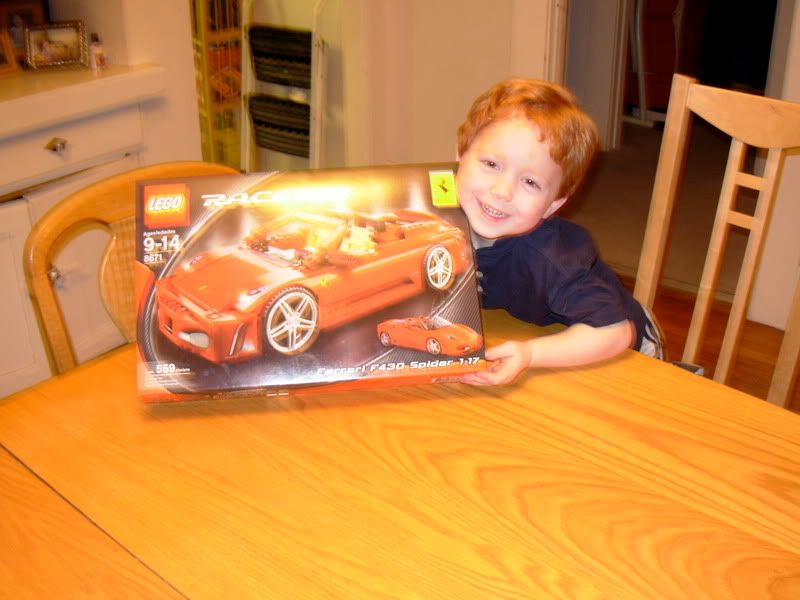
Indeed.

Tuesday, April 03, 2007

Internet Directions Are The Best

Yet more evidence that through the miracle of internet-based mapping systems, you really can get there from here.

Pay particular attention to step 20.

Wednesday, March 28, 2007

Sometimes Chicken Little Is Right

Just when you thought you had enough to worry about when travelling by air (are my carry-on liquids in clear plastic containers? Am I wearing clothing that is easy to remove and put back on at the security check?), now comes the story that space junk just about took out a commercial airliner.

It seems that a flight between Chile and New Zealand (how quaint -- people do stuff in the Southern Hemisphere just like people here in the real world) nearly crossed paths with Russian satellite that was, in the antiseptic phrase of rocket scientists, de-orbiting. The pilot of a westbound overnight flight was more than a little alarmed to see flaming chunks of space junk falling within five miles of his airplane. Consider that at the usual speed such aircraft fly, the separation between the airplane full of sleepy passengers and a flaming hunk of used-to-be satellite was about ten seconds. Just to make the adrenaline flow a little faster, the pilot said he could hear the roar of the falling debris over the sound of his own craft's engines. (Incidentally, I have no trouble believing this. On my last trip to Florida, we passed alarmingly close to aircraft headed west in the same flight corridor. The engine note of those jets was clearly audible.)

The Russians were little help. They had alerted the airlines that the satellite would be re-entering the atmosphere so that pilots could plan for the potential danger. Unfortunately, the Russians got a few details wrong: the day, time and place of the re-entry. Bummer, dude-ski.

Monday, March 26, 2007

Stay Off Washington Roads On Weekends

Think this kid is headed for a tough future? It seems that a Washington state 17-year-old was arrested for drunk driving. Apparently the combination of a minor driver (statistically the most dangerous) and drinking is not something Washington worries about, since it let the boy go. Washington cracks down on adults who drink and drive, though. Later that night, the same cop stopped the same kid for drinking and driving. Unfortunately for the kid (but apparently a huge stroke of good fortune for the good citizens of Washington), as night turned to early morning, he turned eighteen. Just like that, he got his very first adult DUI and was promptly locked up.

The same (former) kid had been stopped for drunk driving earlier in the month. Did nobody tell him that the get-out-of-jail-free cards he had been getting as a juvenile would out when he turned eighteen? Geez, what good are high school counselors, anyway?

Saturday, March 17, 2007

Sporting Frenzy

This is one of those weird, fun weekends when the sporting world offers up one of its better days of the year, particularly for those like me with, let's say, eclectic interests. The NCAA men's basketball tournament, of course, is the colossus that stands astride the sports landscape. The first weekend, packed as it is with 48 games, in which the rarely seen pure joy of sport makes an appearance every once in a while, is probably the best time for the casual fan. In that many games, there is bound to be a fun one or two (as Oregon found out, nearly to their regret). Plus, the now-mandatory filling out of tournament brackets has created perhaps the most effective vehicle for non-fans to experience the fun of following a particular sports team. Pick a team to win, for any reason at all, and you suddenly have a rooting interest. There's nothing quite like pulling hard for Winthrop (who?) to beat Notre Dame, believe me.

Since you asked, yes, my brackets are doing quite well. Historically well, actually. 28 out of 32 correct picks on one sheet, and 27 out of 32 on two others. It has helped that nearly all of the favorites have won.

In addition to basketball, the 12 Hours of Sebring, a venerable and important sports car race, is now underway. More importantly, the Formula One season kicks off this evening with the Grand Prix of Australia. It looks like this will be the most interesting season in years, now that Michael Schumacher has retired. Two-time defending champion Fernando Alonso has left Renault to join super-rookie Lewis Hamilton at McLaren, which seems to be back on form. Always quick Kimi Raikkonen has filled Schumacher's place at Ferrari, and has shown the expected speed. BMW Sauber appear ready to join the ranks of the elite teams, Renault is off the pace, and last year's comic relief, Super Aguri, is dominating the works cars of its patron, Honda.

Um, is anyone still here?

Did I mention that there is a full slate of English Premier League soccer games on as well?

And that I also have drafts for two different fantasy baseball teams today?

Okay, that should have eliminated everyone else. To the couch I go.

Friday, March 16, 2007

Another Reason to Love the Internet

It's been a reasonably good day at the office, it's Friday, and the weather is perfect. Naturally, one does in such situations, I'm thinking, "happy dance!" Hit number one on Google using that search term:


Thanks, Al Gore!

Tuesday, March 13, 2007

The Brilliant Potential of the Human Mind

Are you feeling smart today? On top of your game, are you? Well, meet UCLA's 31-year-old mathematics professor who happens to have made some significant discoveries pertaining to a 2,300 year old math problem, among other things. He seems like a nice-enough guy, he just happened to be working through high school problem sets when most of us were struggling with the nuances of the "plus" sign. Stupendous brainpower apparently runs in the family. One of his brothers is mildly autistic and can play any piece of music on the piano after hearing it once. And pity the poor youngest brother, who had to beg his parents to recognize that he was not like his brother. No, that poor wretch only has degrees in economics, math and computer science and holds down a job as a computer programmer.

Want to know how you know you are a prodigy? Solve these problems. Without paper. At eight years old.

Can you even solve them now? [Yes, Andy, I'm sure you can, but you always did have a little Rainman in you when it came to math.]

Monday, March 12, 2007

My (Shared) Birthday Gift

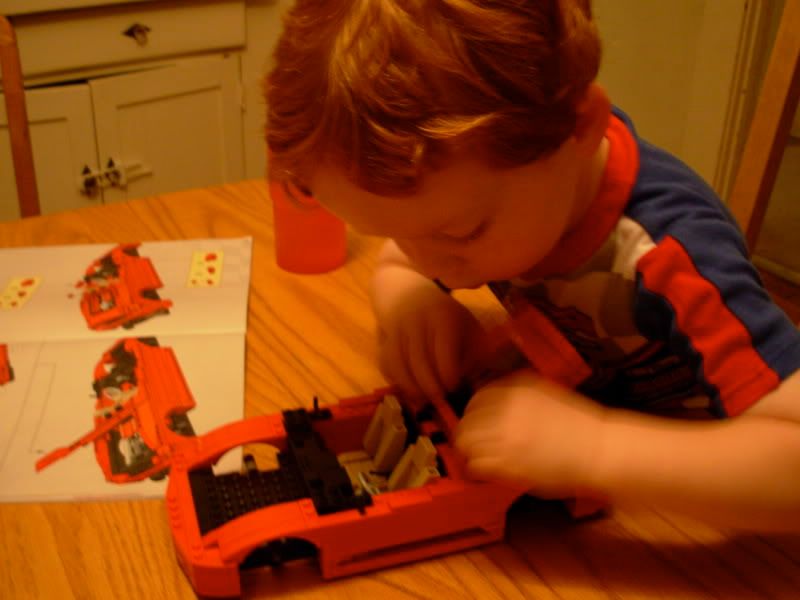
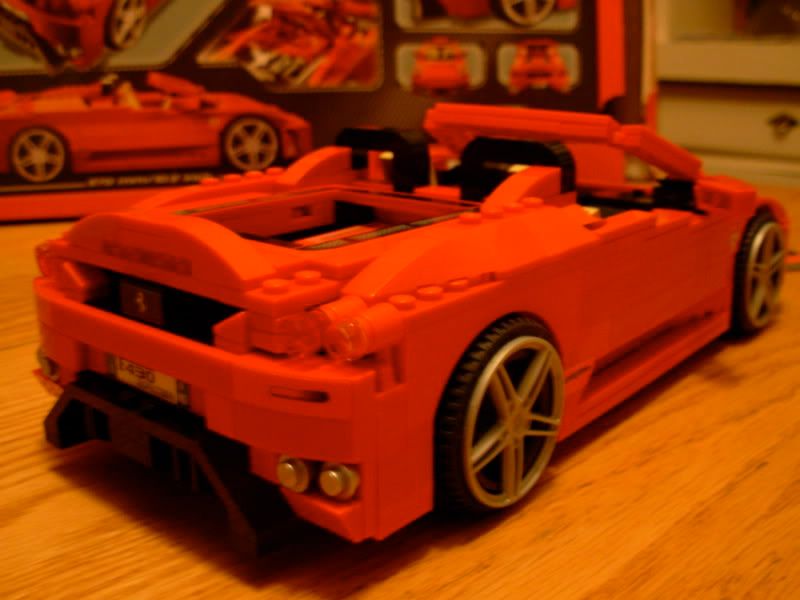
As has been chronicled elsewhere, Michael is quite the whiz with Legos. Knowing this, Grandma Janet got clever and gave me a 1/17th scale Lego Ferrari F430 kit for my birthday. As she undoubtedly knew would happen, it was immediately appropriated by the Lego Kid:


We agreed to share the construction duties, each taking charge of every other construction step, of which there were about 34. It took three evenings, but we did it.


Just Because


Too bad the kid's so camera shy.

Spring Comes Early

The weather gods apparenly observe the appparently arbitrary comings and goings of daylight savings time. Just in time for that extra hour of evening sun, it was about 90 degrees yesterday, and promises to be warmer still today.

I'm a little uneasy with this manipulation of the daylight savings time, however. We should not be plunged back into darkness in the morning; that kind of thing should stay remain in the cozy autumn and deepest winter where it belongs. And have the timekeeping powers that be really thought through the consequences of extending DST until nearly Thanksgiving? One major American tradition will be noticably affected: Halloween. Around here, sunset usually falls at 5:01 pm on October 31st (yes, I checked an almanac). That means that real darkness is complete around 5:30; shortly thereafter, all the little kids who can't stay up late begin their trick-or-treating. The elementary school aged kids take up the next wave, from about 6:30 to 8:00 pm or so. Then it's time to shut off the lights on the porch and any any other part of the house that faces the street in order to avoid the teens who show up to mooch for free candy dressed pretty much as they dress for school -- piercings and makeup for the boys, underthings as outerthings for the girls. [/oldcoot]

This year, thanks to a sunset that will happen after six o'clock, parents will have the unenviable choice of trying to rein in their preschoolers who are already sugar-addled and are clawing at the door to troll for more sweets, imploring them to wait for dark, or commencing the trick-or-treating in broad daylight, which completely robs the event of its rule-bending excitement (since when does Daddy walk me around the neighborhood dressed as Spiderman? At night? Allowing me to collect candy?).

Plus there is the problem of moving all of the festivities an hour later into the evening. No self-respecting kid wants to trick-or-treat in the light, but it's a school night, so, except for the teen reprobates, the candy collecting cannot wait an extra hour. And thus the fragile balance of the Halloween trick-or-treating schedule will be broken. Toddlers will mix with almost-jaded sixth graders. More parents will be called into action in order to chaperone kids simultaneously rather than sequentially by age. Candy will be spilled, and tears will be shed.

Yet more evidence of the fabric of this great nation being torn asunder. When will it all end?

Thursday, March 01, 2007

The Darkened Side of the Moon

Get your telescopes ready. Starting the evening of March 3rd, a total lunar eclipse will plunge the moon into shadow. The linked article explains concisely how the moon will slip into the Earth's shadow for a few hours, turning it a coppery red. The last such event was in October 2004 as the Red Sox were completing their historic World Series sweep of the St. Louis Cardinals, thus simultaneously ending the Curse of the Bambino and depriving millions of New Englanders of their primary excuse to drone on and on about how much they hate New York.

One more thing: the eclipse is only viewable east of the Rocky Mountains. Darned east coast bias.

Tuesday, February 27, 2007

Mini-Review: "The Office"

The original BBC television series "The Office" debuted in 2001 and ended in 2003, but thanks to Netflix, I just finished watching it last night (actually, early this morning). Yes, there is a current American iteration on NBC that is doing quite well in the ratings, but I wanted to understand what the quiet little fuss over the original was all about. Plus, it is not very likely that I will dedicate extra time to a sitcom, so since I essentially had to choose between the original and the follow-up, it was the Brit version for me. (My recent appreciation of certain other aspects of British pop culture had little to do with my decision; that would just be pretentious.)

First, the disclaimers. If you have never liked British comedies, if you found Monty Python to be a noisy mess, if you think "Shaun of the Dead" was only a sub-par slasher flick, the BBC "The Office" may not be for you. If watching a show that is ostensibly in English with subtitles on is too much work (or, ahem, if you can't see the subtitles clearly), this is definitely not the show for you. If awkward silences caused by unforgivably offensive buffoonery make you watch the TV through your fingers, cringing ... well, you might just enjoy this.

The premise is relatively simple, and has been followed many times before: workers in an office, whose actual work is of little consequence and may actually be sucking their souls away on a daily basis, must put up with a distressingly self-important manager while trying to preserve little shreds of their humanity in any way they can. The blunderbuss boss, played by Ricky Gervais, is an astonishingly indecorous boor, whose tragic flaw is that he believes he is making his employees' lives better by trying to be their friend, when he is actually a spectacularly inept, corporate-speak-spouting insecure little man. It is not an understatement to say that Gervais' David Brent is a classic character in television history for the depth of his self-delusion and cringe-inducing attempts to explain himself and his philosophies. Admittedly, part of the jaw dropping effect of Gervais' portrayal comes from the occasional jarring crudity that both British culture and British television permit as a matter of course (fair warning: I do mean crude; if you blush easily, this may not be the show for you). However, while the British expression of the uncouth may be outlandish to America ears, there is certainly an equivalent in American life; the slang may be different, but the sentiment translates perfectly.

The supporting cast is relatively small, with a number of essentially nameless office drones and a few well-drawn featured roles. Brent's sycophantic deputy, Gareth, is a particularly memorable character, almost horrifying in his inability to filter his base impulses. Like Brent, he trudges through life seemingly unaware of what others think of him.

The surprising element of the show, however, is the office romance between Tim, the relatively sane fellow who graduated university a few years ago, is holding down a respectable job in the office, but can't quite figure out what to do next, and Dawn, the pretty receptionist who is engaged to a lunkhead from the warehouse who is (of course) unworthy of her. While the unrequited office romance is a relatively stock trope, it is handled here with great delicacy and charm, which is all the more sweet in the midst of the prevalent indelicacy surrounding them. The furtive glances, the gentle touch to the arm that only the would-be lovers think appears innocuous, the emotional charge in the few unexpected moments of connection ... the show plays it all to perfection by underplaying all of it.

The documentary style of the filmmaking relieves the show of the need to add cue music or audience laughter, which allows the many awkward moments (the show's stock in trade) to fester without an external auditory break to relieve the tension. The camera also has the freedom to close in on Brent, in particular, allowing him to fill the screen with his nonsense as he speaks to the viewer, wherein his explanation of his actions inevitably leave him looking the worse for it. The show also uses a long zoom shot to good effect, capturing the reaction of the entire room as well as the actions of others from afar, heightening the voyeristic feel of the viewer's intrusion into often very private moments.

That's a lot to say about a silly little sitcom that ran only 14 episodes. However, it is rare that a television show will introduce characters that are this memorable, most of whom are simply slightly more pained and painful versions of people we know rather than cartoons played for slapstick laughs. The BBC's "The Office" is certainly not for everyone. It is often uncomfortable, and nearly impossible to understand without subtitles, but if you like that sort of thing (and if you like a nice romance, surprisingly enough), it is well worth the time.

Saturday, February 17, 2007

A Riviera Review

HDTV may have raised the bar considerably when it comes to experiencing sporting events from your living room, but nothing compares to going to a sporting event in person. Golf, in particular, is so well packaged on television that attending a tournament in person is quite unlike watching the same event on TV. If you enjoy golf at all, making the effort to go to a professional tournament in person is well worth the time and expense. (Warning: this is long, so you should probably tune out now, Chris.)

We had the opportunity to spend the day at the Riviera Country Club watching the PGA Tour's Nissan Open. In 80-something degree weather, we experienced much of what a golf tournament has to offer. Amidst the fragrant eucalyptus groves, we saw wiley veterans execute deft chips, young guns crush fairway bombs, superstars remind us why they are, and unknowns show us why they deserve to be on the Tour. We joined huge crowds that reduced our vision to a mere sliver of the action, stood nearly alone only seconds later simply by switching holes, heard the distant roar that told of a hole-in-one, and helped create roars of our own with several thousand other viewers in the natural amphitheater of the 18th green.

Among the highlights: we started our day in the middle of the first fairway, and followed the second group we saw (which included PGA winner Steve Elkington and British Open winner Ben Curtis) to the green. We found an open spot along the rope behind the green away from the pin. Serendipitously, however, it seemed that any player who missed the green long sent their ball right at us. In very short order, we made way for Corey Pavin, Sergio Garcia and Padraig Harrington, all of whom were forced to make difficult chips out of an uneven, tamped-down lie, over a rise to a hole tucked just on the other side of the hillock on a very fast green. Pavin made a brilliant, full swing flop shot, Harrington had a middling effort, and Garcia fluffed his first attempt, failing to get it out of the rough (he parred the whole anyway, though). For each of these events, we were within six feet of the player at times.

After the final group played through, we explored the course a bit. As soon as the huge crowd that followed the leading Phil Mickelson dispersed, we found ourselves moments later nearly alone at the 11th green watching two relative unknowns putt out. On our way to the back end of the course, we paused to watch Jeff Quinney, a Tour rookie who has been in contention for the Sunday lead in three tournaments already this year, absolutely crush a fairway wood to reach the 11th green, a par five, in two shots. The casual grace with which Quinney and one of his playing partners executed this terribly difficult shot is a clear indication at how skilled these guys are. If the ball ever comes off of any of my clubs with the kind of power and sound that these players generate, I'll quit my job and take up golf full time.

We spent a few minutes in the small grandstand at the par three 14th hole, long enough to watch Mike Weir clear the green, toss aside a television microphone embedded in the green, make a nice chip onto the putting surface, then two-putt for a disappointing bogey. On our way once again, we stopped along an adjacent fairway just in time to see Jim Furyk and Ernie Els, whom we had seen a little while earlier at the first hole, play masterful iron shots into the seventh green. On we went to the par three 6th hole at the very end of the property, with its unique bunkered green. We arrived two groups ahead of Mickelson's threesome. We watched the players hit over our heads, then juked and dived for a view of the green as the players finished the hole.

We proceeded away from the huge gallery following Phil, hiking nearly alone up the hill along the 5th hole, stopping under a tree by ourselves to watch a couple of groups hit their approach shots down the hill to the 5th green. Then we continued up the hill to park ourselves for a while at the famous par three 4th hole. At this point, only the players who were well down the leader board were playing the low-numbered holes, because they had all started their day on the 10th hole, and were now into their last nine holes of the day. Nevertheless, we had excellent green-side seats on the grass near the hole to watch several groups come through. We had the opportunity to see how creative professional golfers can be. The 4th hole is a long par three guarded by a fearsome bunker in front. Most of the shots we saw trickled off the back into a collection area. From that location, we saw players hit high flops, low pitches, running chips, putts with drivers, and conventional putts. Amazingly, no one method was any less successful than any other.

Finally, we grabbed some lunch and followed Vijay Singh up the 18th fairway to the bowl-like 18th green, where we parked ourselves and watched the leading six groups finish their day. There I saw more evidence that these guys are not like you and I. A relatively unknown player, John Rollins, had pushed his drive into a grove of eucalyptus trees, which blocked his route to the green both laterally and vertically. His only direct play was right at us on the hillside, which would do little to improve his score. While the player in me conceded and prepared for some sort of short sideways play, Rollins hit the perfect shot: a controlled slice that never rose more than twenty feet above the ground, touched down on the apron in front of the green and rolled to a stop two feet from the hole after missing the pin by about an inch. All of this from 200 yards away. Incredible.

The opportunity to get close to the action in unexpected places is a key feature of a golf tournament experience. Television does not show you how close the various holes are to each other, that just beyond the huge gallery watching the featured player is a completely open greenside where another supremely talented golfer plies his trade in near anonymity, that the bunkers are truly frightening (if you are a casual golfer, you have never seen anything like these man-eaters), that the players engage in easy banter with each other and the crowd. For those who do not enjoy golf in any form, attending a tournament will not likely cause a change of heart. But for those who enjoy the game, watching a tournament in person is fun and illuminating.

And as always with golf, even on its worst day, if nothing else it is still a walk in a beautiful park.

Friday, February 16, 2007

Silence on the Tee, Please

So this is where we will spend tomorrow, under a beautiful February SoCal sky:


(That's Riviera Country Club. They're having a little get together this weekend.)

Sunday, February 11, 2007

The Needle Finder

I love the internet. There is almost no question that cannot be answered (as long as you are comfortable with an answer that may not be, um, factually correct), and almost no product that cannot be found.

This weekend, I indulged myself by getting a container for my guitar effects pedals. For the uninitiated, the sound of a guitar can be tweaked through the use of little foot pedals that electronically manipulate the sound. These pedals are fun, but they all must be wired together, and they all require power. Unless you are Mr. Duracell, a DC converter is the only way to go. When you have several pedals, though, a powerstrip is required just to provide power to all of the converters needed for the various effects pedals, to say nothing of the snake pit of power and signal wires that results. Portability is also hamped by this arrangement, as all the pedals, wires, cables and converters must be toted in some kind of container, and then must be tediously pieced together before playing. Thankfully, it is possible to buy a travel-worthy case that not only carries the pedals, but keeps them permanently hooked up for both signal and power, with only a single converter powering the whole thing. As is the case with some of my new modeling tools, I've wanted one of these things since I was sixteen, and I finally got it.


As in many markets, however, logic does not always prevail in the land of effects pedals. Although the case comes with a "daisy chain" to provide power to all of the pedals, not all pedals take the same kind of adaptor connection. The case, made by Boss, is well-equipped to handle pedals made by Boss pedals as well as contemporary pedals of other manufacturers. Unfortunately, not only is one of my pedals not made by Boss, it is also about 20 years old. So, then, the search begins. Is there such a thing as an adaptor adaptor, as it were? And if so, where can I buy such a thing?

Enter my pal, Google. After a few different searches, I finally found an online retailer that sold a DC converter that not only had a daisy chain of connnectors, but also had a variety of adaptors for the various different kinds of DC sockets that various manufacturers use. The problem, of course, is that I did not need the whole converter outfit, just one of the adaptors. So I tracked down the manufacturer's website, and sure enough, they sell the adaptors separately. Four dollars (plus six for shipping) later, I have a six inch adaptor cable on its way to me, the perfect solution to my problem.

Monday, February 05, 2007

Peace In Our Time

At last, the news we have been waiting so long to hear ...

Apple and The Beatles have settled their trademark dispute, for the third time. As you may recall, Apple's expansion of its business into music quasi-publishing prompted the Fab Four's business managers to file suit for breach of the last trademark agreement between the two companies, a lawsuit that Apple eventually won at trial. Although Apple now has clear permission to use its name and logo, even in connection with iTunes (Apple's expansion into music quasi-publishing prompted the band's most recent lawsuit), it is not yet known whether The Beatles will finally consent to place their recordings on iTunes for downloading. Steve Jobs' rollout of the iPhone last month included lots of Beatles references; as with the very name "iPhone," and as with the use of the name "Macintosh" before it, Jobs has promised something that his lawyers will have to buy for him after the fact. Ah, well, you know, he's a visionary. One mustn't let the vagaries of intellectual property ownership law confound his muse.